Wonderful Blog
Microsite Vs Landing Page

Published March 5, 2026
Microsite Vs Landing Page
The choice between a microsite and a single landing page for paid traffic isn’t about which is “better”—it’s about fit: one campaign, one offer, one action usually means one landing page; multiple products, campaigns, or segments can justify a microsite. This post gives you a clear decision framework and execution rules so you don’t overbuild or under-deliver. Scope: when to use which for paid campaigns only. Out of scope: brand microsites for SEO or organic, or full-site architecture.
TL;DR
- Landing page: One URL, one offer, one primary CTA. Best for single campaign/creative and when message match and speed matter most. Most paid campaigns should start here.
- Microsite: Multiple pages under one subdomain or path (e.g. campaign.yourbrand.com). Use when you’re running several distinct offers, segments, or campaigns and need a clear structure without sending everyone to the same page.
- Default to a landing page unless you have a concrete reason (multiple offers, A/B by segment, legal or regional needs) for multiple pages. More pages = more maintenance and more ways to break message match.
- Message match still rules. Whether it’s one page or five, the ad and the destination must align. Don’t send “Product A 20% off” to a generic homepage.
- Out of scope: SEO microsites, full-site redesign, or organic-only content strategy—see landing-page-inspiration and which-attributes-describe-a-good-landing-page-experience for page quality and structure.
When to Use a Landing Page
Use a single landing page when:
- One campaign (or one ad set) with one offer and one primary action.
- You want the simplest path to conversion and the fewest variables (one URL, one form, one CTA).
- You’re testing creative or audience and need a stable, fast destination. Google’s page experience guidance and ad platform quality signals favor fast, focused pages.
Landing pages are easier to keep in message match with ads, easier to load quickly, and easier to iterate. For most performance campaigns, start with one page per offer. Common Thread Collective and similar shops consistently stress one primary CTA and one clear path; a single landing page enforces that.
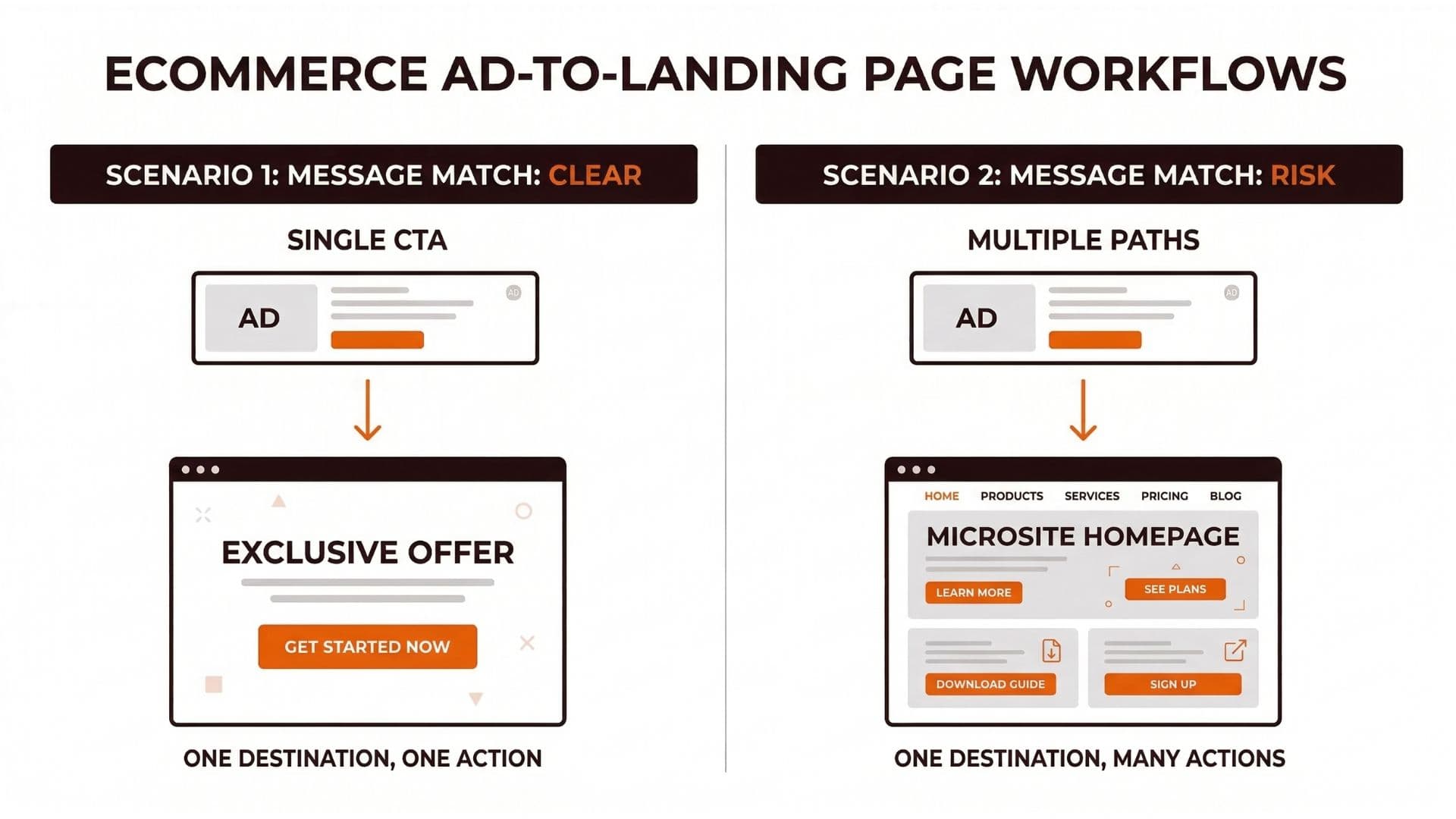
Visual: Side-by-side: one ad → one landing page (single CTA) vs one ad → microsite homepage (multiple links). Label “Message match: clear” vs “Message match: risk.” Suitable as featured image.
When to Use a Microsite
Use a microsite (multiple pages, one subdomain or path) when:
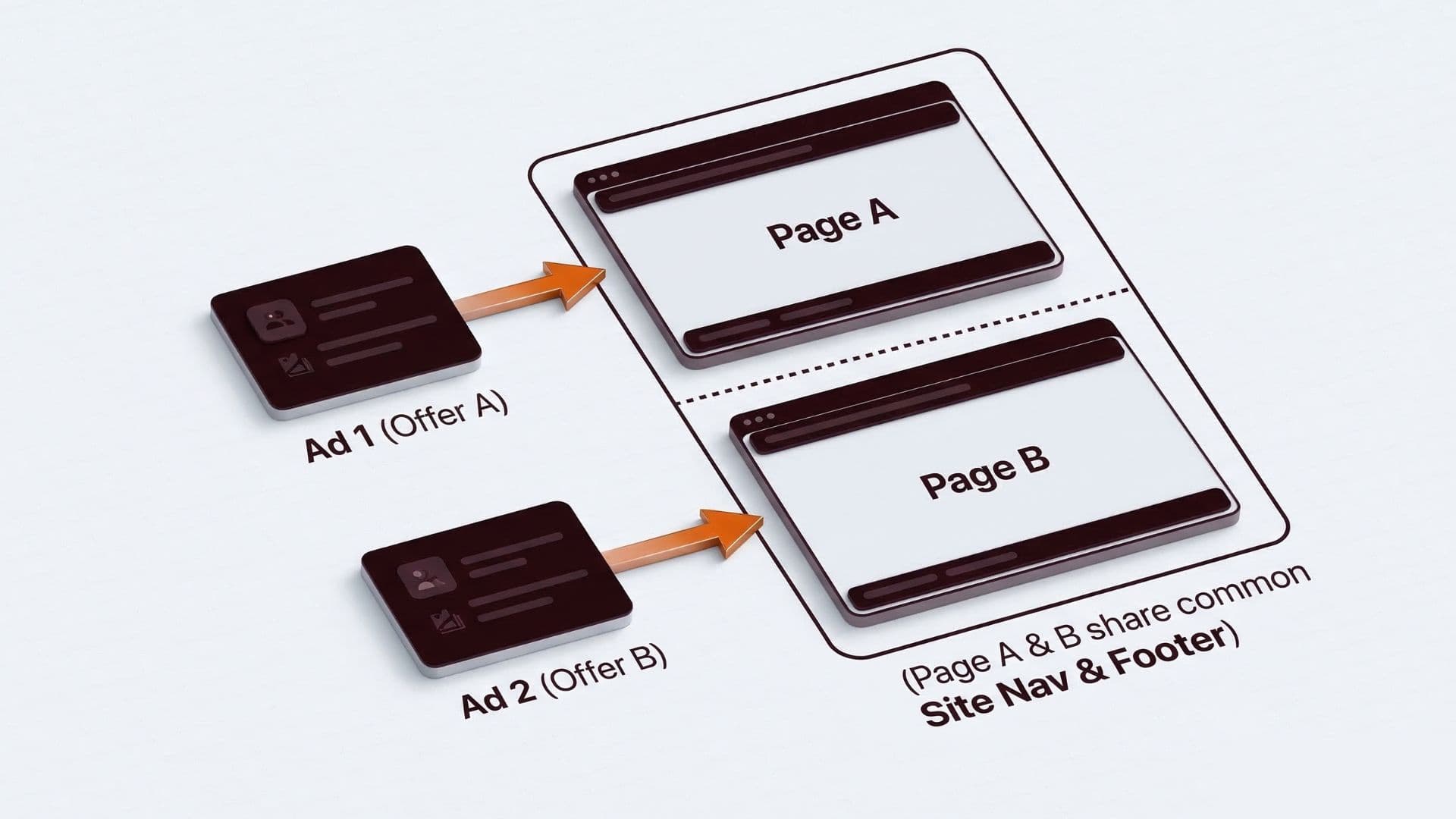
- You’re running multiple distinct offers or campaigns and need a different page per offer (e.g. Product A, Product B, lead magnet) but want a shared look and domain.
- Segment-specific flows (e.g. by region, vertical, or ad creative) where one URL per segment improves relevance and reporting.
- Legal or compliance requires separate pages (e.g. different disclaimers, terms, or regional content).
A microsite is not “a fancy landing page.” It’s a small set of pages with a clear information architecture. Each entry point (each ad or segment) should still land on a page that matches the ad—so you’re really running “landing page per offer” with a shared shell. If you can’t articulate why you need more than one page, stick to one landing page.
Decision Framework: Landing Page vs Microsite
| Criterion | Landing page | Microsite |
|---|---|---|
| Number of offers/campaigns | One | Multiple (each with its own page) |
| Primary CTA | One (e.g. buy, apply, submit) | One per page; nav can link between pages |
| Message match | One ad → one page | One ad → one page (per campaign); avoid sending to “home” |
| Build and maintenance | Simpler | More pages, more QA, more URLs to track |
| When to choose | Default for single offer | Multiple offers/segments, or clear legal/regional need |
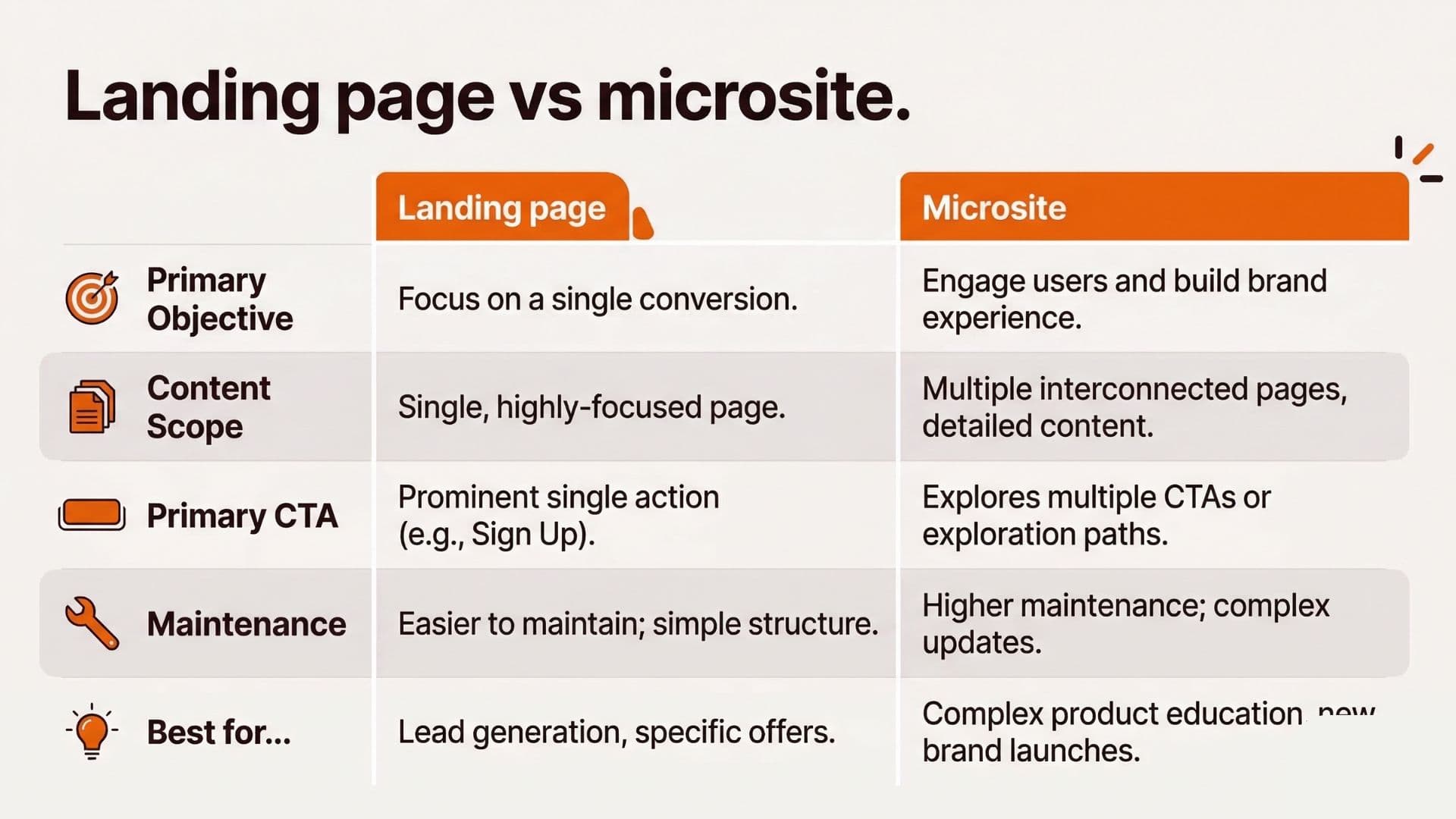
Use this when deciding for a new campaign or when someone asks “should we build a microsite?” If the answer isn’t “we have multiple offers or segments that need separate pages,” default to a landing page.
Real-World Example: Switching Back to a Landing Page
A brand had a small microsite (home, product A, product B, contact) and was running Meta campaigns for one product. All ads pointed to the microsite home. Conversion was weak and reporting was noisy. They built a single landing page for that product, matched the ad copy and creative to the page, and sent all traffic there. Conversion rate improved and they could clearly attribute by ad. They kept the microsite for other uses but stopped sending paid traffic to it for that campaign. Lesson: one offer, one page, one CTA—even if you already have a microsite.
What to Avoid
- Sending paid traffic to a microsite “home” when the ad is about one offer. That breaks message match and dilutes the CTA.
- Building a microsite “for flexibility” without multiple offers or segments. You add complexity without benefit.
- Treating a microsite as one asset. Each page that receives paid traffic should be optimized like a landing page (speed, CTA, message match).
Actionable Takeaway
Default to a landing page for paid campaigns: one offer, one URL, one primary CTA. Use a microsite only when you have multiple offers or segments that need distinct pages, and always send each ad to the page that matches it—never to a generic home. Use the table above to decide; when in doubt, choose the landing page. For landing page types and formats, see our landing page library; for ad-to-page alignment, see which-attributes-describe-a-good-landing-page-experience. To brief different page types in one workspace, use our briefs product.
Keeping ad creative and landing pages aligned is easier when they live in one workflow. Wonderful helps you create and test ad creatives faster so your campaigns and destinations stay in sync.
For additional landing page guidance, see SaaS Landing Page.