Wonderful Blog
Which Attributes Describe a Good Landing Page Experience?

Published March 23, 2026
Which Attributes Describe a Good Landing Page Experience?
A good landing page experience is not just "nice design." It is the combination of relevance, speed, clarity, and usability that makes the visitor feel they landed in the right place and can take the next step without friction.
For paid traffic especially, landing page experience affects both conversion and efficiency. If the ad makes one promise and the page feels slow, generic, or confusing, performance drops before the offer gets a fair chance.
TL;DR
- Message match comes first. The page should continue the ad, not restart the conversation.
- Speed and stability matter. Fast load and stable layout reduce friction before the visitor even reads.
- Clarity beats decoration. One primary CTA, obvious hierarchy, and scannable proof usually outperform clutter.
- Trust helps action. Reviews, proof, and transparent expectations lower perceived risk.
1. Relevance and Message Match
The first attribute of a good landing page experience is relevance.
If your ad promises:
- a specific offer
- a specific product
- a specific pain point
- a specific CTA
the page should reflect that same promise immediately.
That means the hero section should echo the ad headline or angle closely enough that the visitor does not need to reinterpret why they clicked. This is one reason dedicated landing pages often outperform generic destination pages for paid campaigns.
2. Fast, Stable Performance
Visitors judge the page before they consciously evaluate the copy.
If the page loads slowly, shifts around, or feels laggy on mobile, the experience already feels low-quality. Good landing page experience therefore includes:
- fast visible load
- responsive interactions
- stable layout while content appears
- mobile-friendly spacing and tap targets
In practical terms, this means paying attention to Core Web Vitals and to the simple human question: "Does this page feel dependable?"
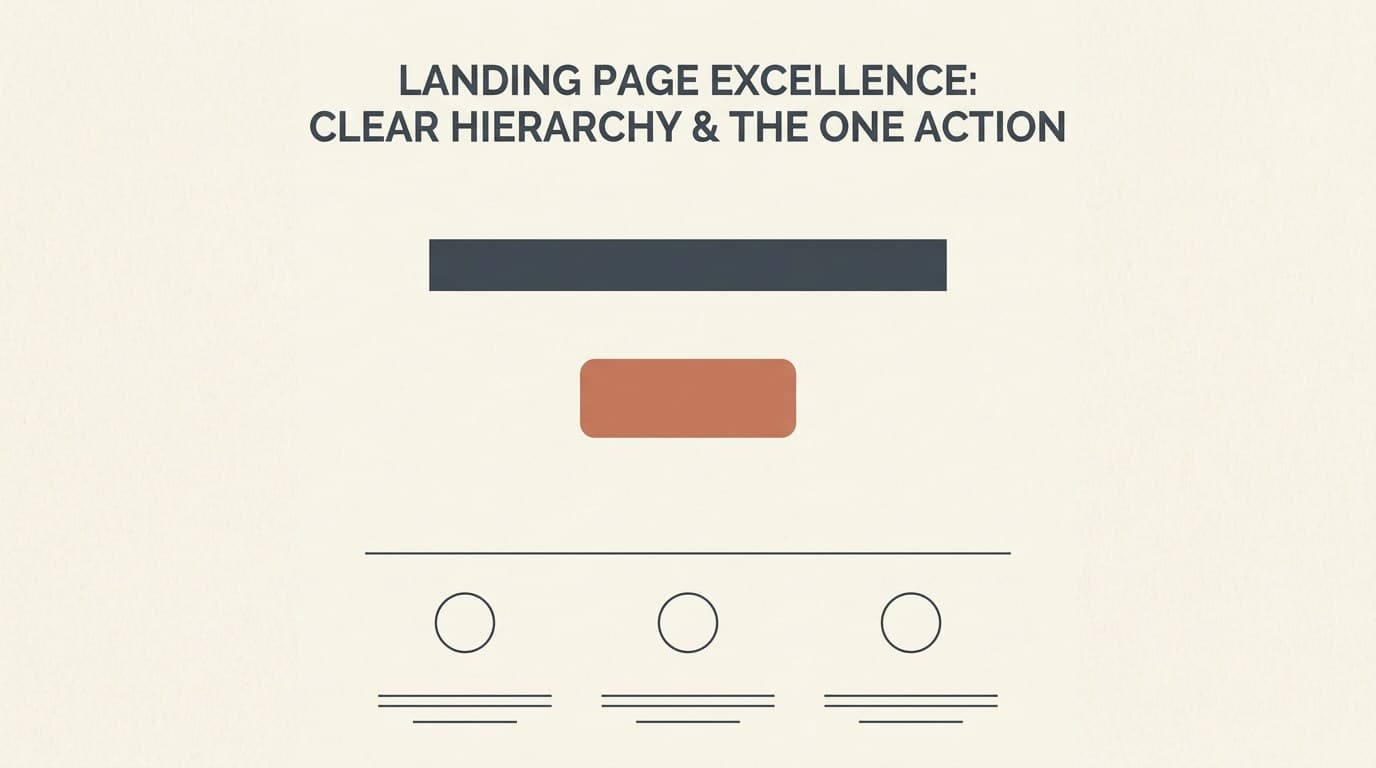
3. Clear Hierarchy and One Main Action
A page can have strong copy and still feel weak if the structure is unclear.
Good experience usually means the visitor can identify three things quickly:
- what this page is about
- why it matters
- what to do next
That is why strong landing pages tend to have:
- one obvious headline
- one primary CTA above the fold
- supporting proof nearby
- sections that follow a logical order
Confusion usually shows up as multiple competing buttons, vague headlines, or too many directions at once.
4. Usability on Mobile
Many landing pages are reviewed on desktop and judged on mobile by the visitor.
Good landing page experience includes mobile basics:
- readable text without zooming
- short forms
- large tap targets
- spacing that prevents accidental clicks
- no broken layouts above the fold
This matters even more when the traffic comes from mobile-first channels like Meta, TikTok, and many Google placements.
5. Trust and Expectation Setting
People convert more easily when risk is reduced.
Trust signals do not need to be flashy. They need to be credible and easy to understand. Common examples include:
- customer proof
- review snippets
- company logos
- implementation clarity
- pricing or qualification transparency
Good landing page experience also means the page sets expectations honestly. If the CTA is for a demo, say so. If the next step is a sales conversation, do not disguise it as something else.
A Simple Checklist
Before publishing, ask:
- Does the hero clearly match the ad or keyword?
- Is there one primary CTA?
- Does the page load fast and feel stable?
- Is the mobile version easy to use?
- Is proof visible before the visitor has to work for it?
- Is the next step obvious and honest?
If the answer is "no" to multiple items, the issue is probably not the traffic source. It is the landing page experience itself.
Actionable Takeaway
Good landing page experience is usually built from a few disciplined basics:
- relevance
- speed
- clarity
- usability
- trust
You do not need a complicated page to convert well. You need a page that feels like the right destination, loads quickly, and makes the next step obvious. For examples of high-quality landing page experiences, see our landing page library. To use structured review for landing page quality, see our review and approvals tool.
For more landing page guidance, see Landing Page Inspiration and SEO Landing Pages.
Soft CTA
Wonderful helps teams keep landing page briefs, creative inputs, approvals, and revisions aligned so pages stay clear, fast, and consistent from ad click to CTA.