Wonderful Blog
Seo Landing Pages

Published March 2, 2026
Seo Landing Pages
SEO landing pages are destination pages built to rank and convert: they answer a search query and drive one primary action. They sit between "pure SEO content" and "paid-only landing pages"—you optimize for relevance and clarity so they work for organic traffic and can be used for paid when message match fits. This post is scoped to definition, structure, and one checklist. Out of scope: technical SEO, keyword research, or full site architecture—see which-attributes-describe-a-good-landing-page-experience and landing-page-inspiration for conversion and inspiration.
TL;DR
- Definition: A page built for a specific intent (keyword/query) with one primary CTA. It can serve organic search and paid traffic when the ad matches the page.
- Difference from generic pages: One clear offer, one primary action, message match. Google's page experience guidance favors clear, focused pages; Core Web Vitals matter for both SEO and conversion.
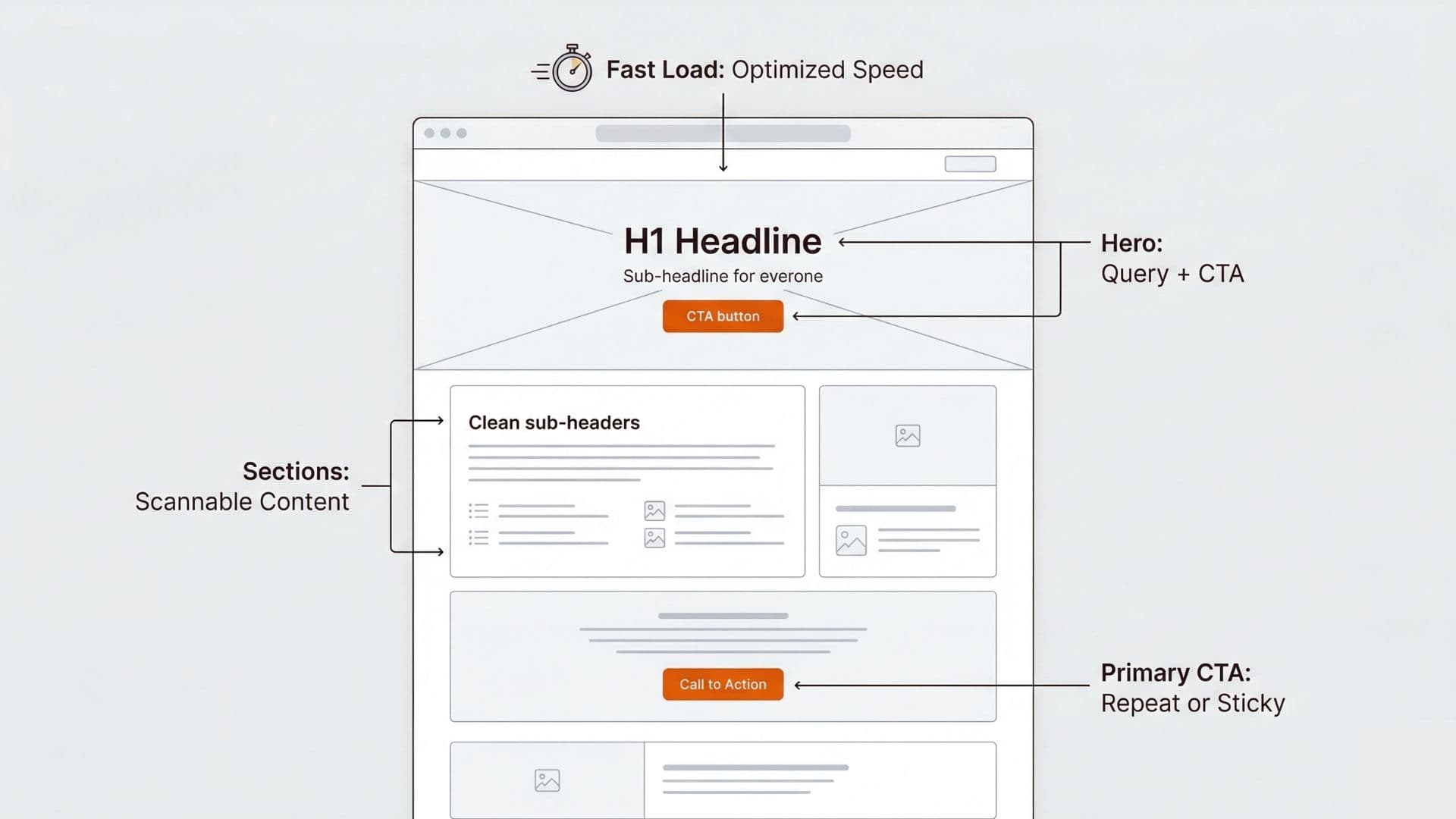
- Structure that works: Hero that answers the query, clear sections, one primary CTA, fast load. Same principles as high-converting paid landing pages—see microsite-vs-landing-page for when to use a dedicated page vs. site.
- Checklist below for building or auditing an SEO landing page. Use it before you scale content or send paid traffic to it.
- Out of scope: Keyword tools, link building, or technical crawl/index—this is page-level structure and intent only.
What SEO Landing Pages Are (And Aren't)
An SEO landing page is built to rank for a specific intent and convert that intent into one action—signup, download, contact, or purchase. It's not a blog post (multiple takeaways) or a homepage (many paths). Common Thread Collective and performance teams stress one primary CTA and message match for paid; the same discipline applies when the traffic is organic: the page should deliver what the query promises and give one clear next step. If you later run paid to that page, ad copy and headline should match so quality and conversion hold up. See real-world examples of high-converting landing pages for inspiration on structure and messaging.

Structure That Works for Search and Conversion
- Hero: Headline that directly answers the search intent. One subline, one primary CTA. No competing buttons.
- Sections: Scannable (H2s, short blocks). Content that satisfies the query without fluff; Google's helpful content guidance favors clarity and expertise.
- One primary CTA: Repeated in a focused way (e.g. once above the fold, once after proof). Secondary links (footer, nav) can exist but shouldn't compete with the main action.
- Speed and clarity: Core Web Vitals (LCP, INP, CLS) affect ranking and conversion. Fast, focused pages outperform slow or cluttered ones.
SEO Landing Page Checklist
| Check | Why it matters |
|---|---|
| Page answers one clear intent (query/keyword) | Relevance for search and for visitors. |
| One primary CTA above the fold | Clear next step; supports conversion and quality signals. |
| Headline and copy match intent | Message match; works for organic and paid. |
| Fast load on mobile | Core Web Vitals; many searches are mobile. |
| No competing CTAs above the fold | One primary action. |
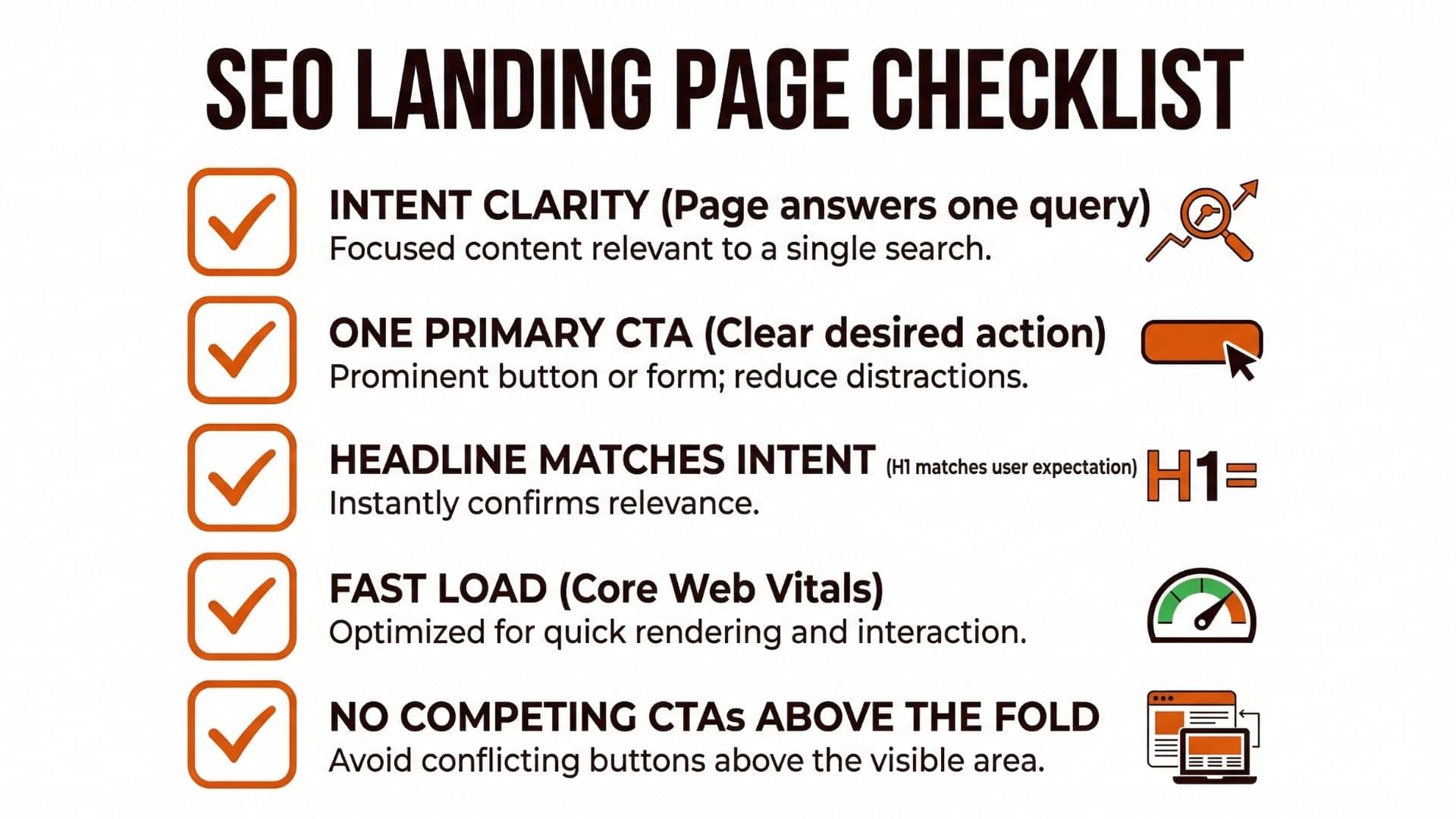
Use this when creating or auditing an SEO landing page. If the page tries to rank for three different intents or has five CTAs, narrow the intent and the CTA.
Real-World Example: One Page, Organic and Paid
A B2B brand had a product-page that ranked for a mid-funnel query but had a generic "Contact us" and three other CTAs. They created a dedicated SEO landing page: headline that matched the query, one primary CTA (demo request), three short sections that answered the intent, and a fast load. They used the same page for Google Ads when the ad copy matched. Organic conversions from that page increased, and paid CTR and conversion rate improved when they switched from the homepage. Lesson: one intent, one CTA, same page for search and paid when message match holds.
Actionable Takeaway
SEO landing pages should answer one intent and drive one primary action. Use the checklist above—intent clarity, one CTA, message match, speed—and keep structure consistent so the page can work for organic and paid. For page experience and quality signals, see which-attributes-describe-a-good-landing-page-experience; for when to use a dedicated page vs. site, see microsite-vs-landing-page.
Keeping landing pages and ad creative aligned in one workflow makes it easier to maintain message match. Wonderful's Workflow platform helps you produce landing pages inside your creative workflow so your SEO and paid pages stay on brief. For related guidance, see Landing Page Inspiration and Should Google Ads Landing Page Link to Website Landing Page.