Wonderful Blog
Should Google Ads Landing Page Link to Website Landing Page?

Published February 26, 2026
Should Google Ads Landing Page Link to Website Landing Page?
Sometimes yes, often carefully, and usually not as a prominent competing path.
The problem is not that links to the main website are always bad. The problem is that many landing pages give visitors a bigger, more distracting alternative path than the primary action the ad was built to drive.
TL;DR
- Default to one primary CTA. A Google Ads landing page should usually keep the main action visually dominant.
- Secondary links can still be useful. Privacy, terms, trust details, and support links often make sense.
- Prominent website links create leakage. If the site link competes with the CTA, conversion usually gets weaker.
- Test when unsure. If you think navigation helps, treat it as an experiment, not an assumption.
Why This Question Matters
A landing page exists to continue the ad's promise and move the visitor toward one next step. A website exists to offer multiple paths.
Those are different jobs.
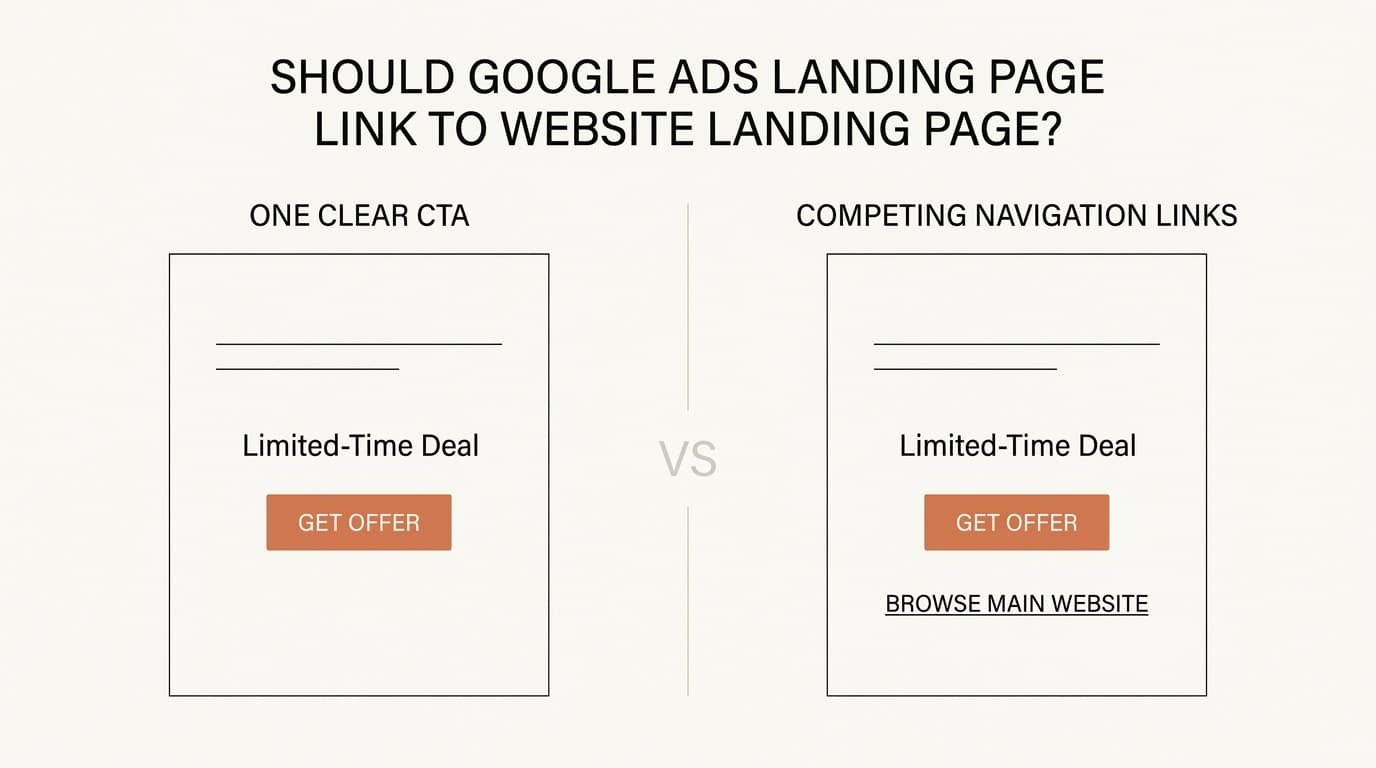
When you add a large "Visit our website" or full navigation to a paid landing page, you turn a focused destination into a browsing environment. That can reduce conversion because the visitor now has to choose between:
- the action you want
- the action they find most comfortable
Those are not always the same thing.
When Linking to the Main Website Makes Sense
There are valid reasons to include website links, especially secondary ones:
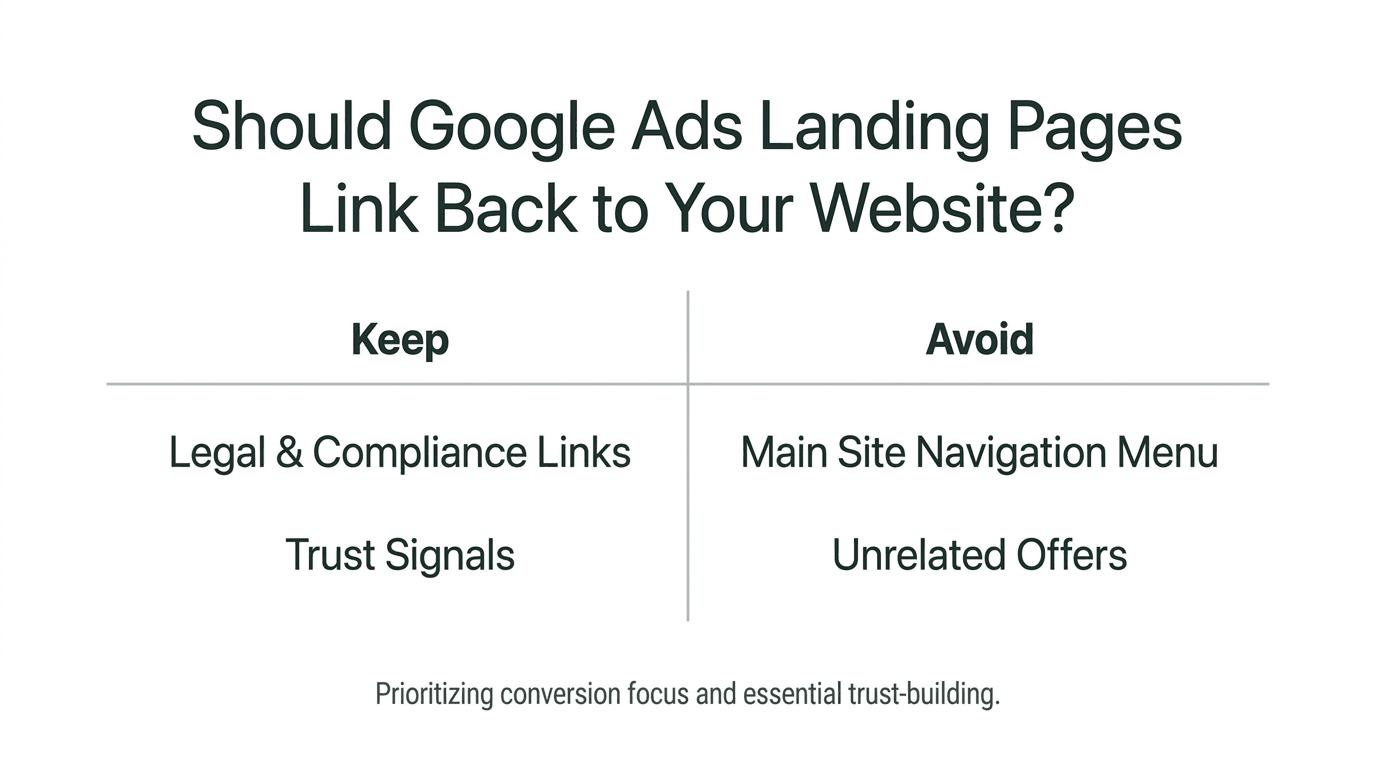
- Trust/legal: privacy policy, terms, security, and compliance details
- Support information: help center or FAQs for higher-consideration offers
- Post-conversion paths: where you want users to go after the form or signup
- Tested exceptions: cases where navigation has been proven not to hurt the goal
The key is visual priority. A trust link in a footer is different from a bold header link competing with the CTA.
When It Usually Hurts
Website links usually hurt when:
- the landing page is designed for one high-intent action
- the visitor already has enough context to act
- navigation becomes the strongest visual element near the hero
- the offer requires focused momentum
In those cases, the site link does not add clarity. It gives the visitor a cleaner way to avoid deciding.
A Good Default Rule
Use this simple rule:
- Primary CTA stays dominant.
- Trust/legal links can remain secondary.
- Main-site navigation should be minimal unless testing proves otherwise.
This is a safer starting point than assuming more navigation always increases confidence.
Quick Checklist
Before launch, ask:
- Is there one obvious CTA?
- Does any site link compete visually with that CTA?
- Do we need the link for trust, legal, or support reasons?
- Is this a high-intent page where distraction is expensive?
- Have we actually tested the alternative?
If you have not tested it, default to focus.
Actionable Takeaway
Your Google Ads landing page can link to the main website, but it usually should not invite the visitor away from the page before they complete the intended action.
Use site links when they support trust or necessary context. Avoid them when they dilute the purpose of the page. For landing page structures that convert, see our library. To build landing pages within your creative pipeline, use our workflow tool. For more guidance, see SEO Landing Pages.
Soft CTA
Wonderful helps teams keep landing page strategy, creative, and approval decisions aligned so pages stay focused on conversion instead of slowly accumulating distractions.