Wonderful Blog
SaaS Landing Page

Published February 21, 2026
SaaS Landing Page
A SaaS landing page has to do two jobs at once: explain enough for a buyer to trust the product, and keep the next step simple enough that they actually take it.
That tension is why SaaS pages often drift into one of two bad extremes: either they are too thin and generic, or they become long product tours with too many paths and weak CTA focus.
TL;DR
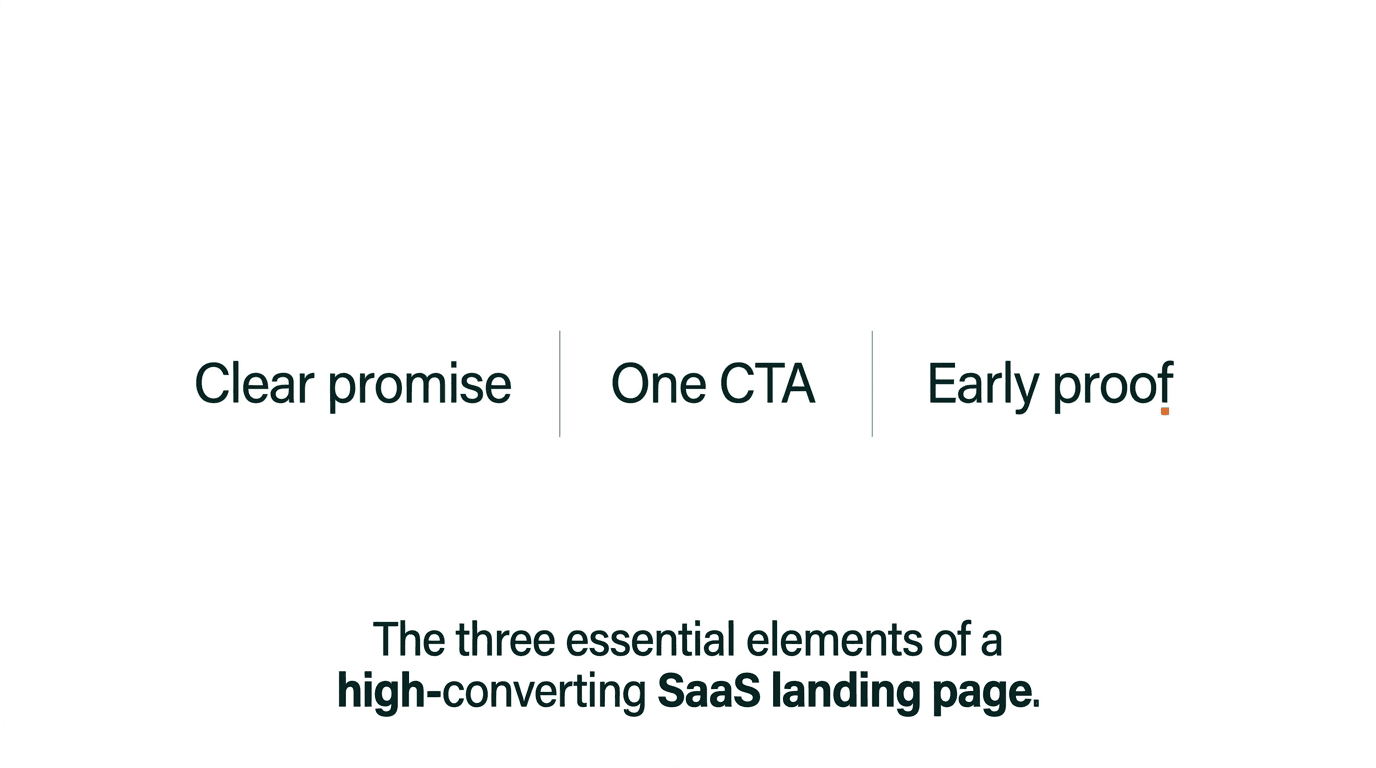
- Lead with one clear value proposition. The visitor should understand the offer in a few seconds.
- Choose one main CTA. Demo, free trial, or signup should be clear and visually dominant.
- Add proof early. Logos, testimonials, or outcomes help reduce B2B hesitation.
- Teach only what is needed to move forward. The page should support a decision, not explain the entire product universe.
What the Hero Needs to Do
The hero section should answer:
- What is this product?
- Who is it for?
- Why is it valuable?
- What should I do next?
That usually means:
- one clear headline
- one primary CTA
- one short support line
- one form of proof or product context
Many SaaS pages weaken conversion by trying to serve every audience and every use case in the hero. Specificity usually performs better.
Proof Belongs Near the Decision
SaaS buyers often need evidence quickly.
Useful proof can include:
- customer logos
- testimonial snippets
- outcome statements
- category credibility
- product screenshots or workflow context
Proof is strongest when it reduces uncertainty near the CTA instead of living far down the page where many visitors never see it. See hero landing page examples to understand where proof typically appears.
What to Include After the Hero
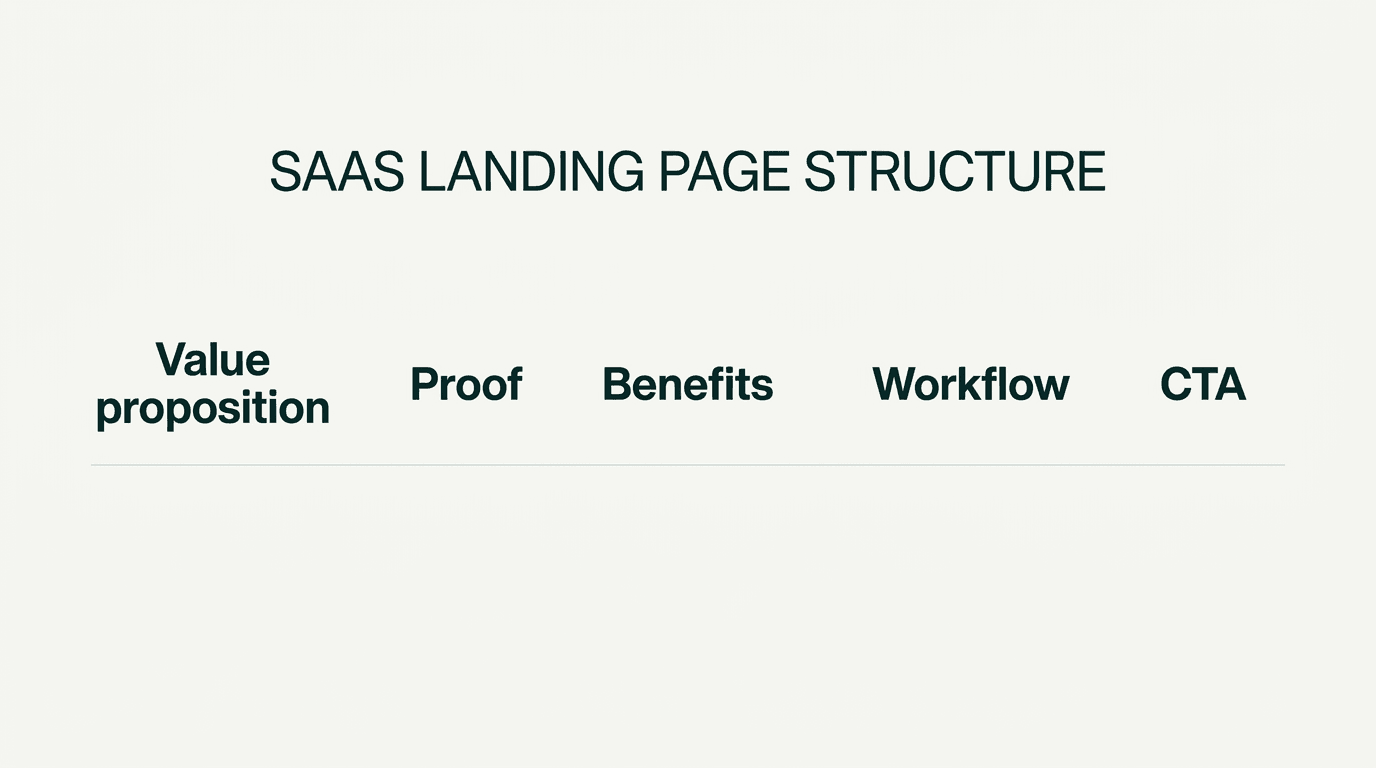
A practical SaaS page usually moves through this sequence:
- value proposition
- proof
- benefits or outcomes
- short workflow explanation
- CTA repeat
You do not need every feature on the page. You need enough information for the next step to feel justified.
Common SaaS Landing Page Mistakes
Watch for:
- multiple equal CTAs
- vague hero language
- proof hidden too far down
- too many product details before the main action
- navigation that encourages wandering instead of deciding
SaaS pages do need explanation, but explanation should support the CTA rather than compete with it.
SaaS Landing Page Checklist
Before launch, ask:
- Is the value proposition specific?
- Is there one primary CTA?
- Is proof visible early?
- Does the page explain enough to justify the next step?
- Are there unnecessary competing actions above the fold?
If those five items are strong, the page is already ahead of many B2B SaaS pages.
Actionable Takeaway
A strong SaaS landing page is not the page that says the most. It is the page that makes the product feel credible, relevant, and easy to act on.
Keep the structure simple:
- clear promise
- early proof
- focused CTA
- enough explanation to support action
Soft CTA
Wonderful helps SaaS teams manage landing page briefs, creative inputs, and approvals so pages ship faster without losing message clarity or CTA focus. Wonderful's Briefs & Docs help you brief and produce landing pages faster. For more landing page patterns, see Landing Page Inspiration and SEO Landing Pages.