Wonderful Blog
Creative Strategist
Role definition only: scope, outputs, and frameworks—not job descriptions.

Published March 8, 2026
Creative Strategist
A creative strategist in performance marketing owns the "what and why" of creative—briefs, testing hypotheses, and connecting creative to business and campaign goals. Most content describes the title vaguely. This post defines the role by responsibility, outputs, and how it fits with media and creative teams, plus a framework you can use to scope the role.
TL;DR
- Core responsibility: Translate goals and audience into briefs, creative angles, and test plans—not execution of ads or design.
- Outputs: Briefs, creative frameworks, test plans, and post-campaign creative learnings. They don't own final art or media buy.
- Fits between: Strategy/PM and creative production; works with media for targeting and with creative for execution.
- One framework below: responsibility by stage (discover, brief, test, learn). Use it to hire or scope the role.
- Out of scope: Job post templates, salary, or generic "creative director" content—this is role definition and execution only.
What a Creative Strategist Actually Does
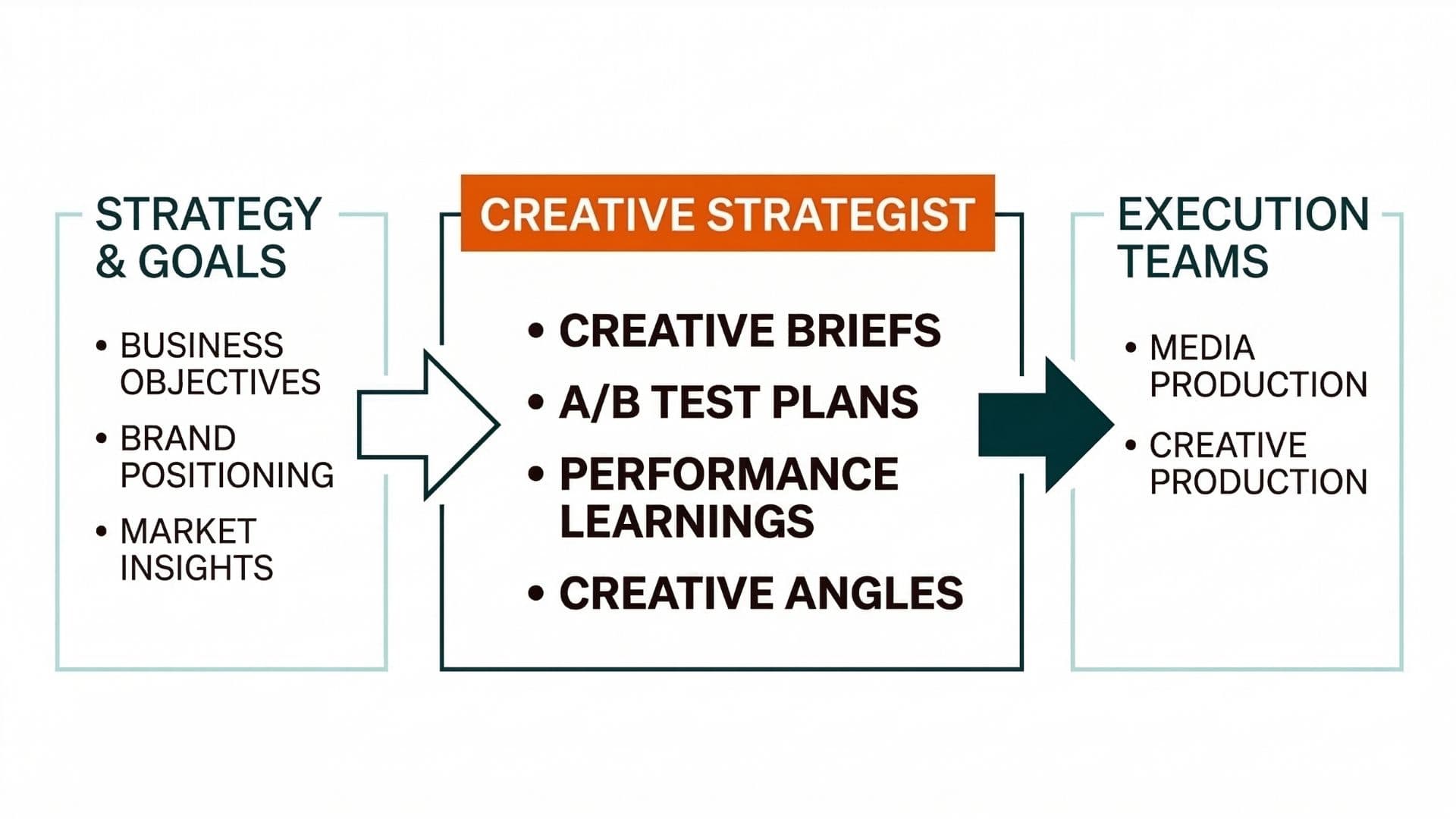
HubSpot's definition of content strategy overlaps with "strategy" in general; for creative strategy in performance, the focus is ads and paid creative. The creative strategist answers: What should we say? What should we test? What did we learn from the last round? They don't typically run the media buy or produce final assets—they brief and frame the work so media and creative can execute.
In practice that means: writing or owning briefs, defining angles and hypotheses for tests, and turning results into creative takeaways. They sit between "what's the goal?" and "here's the ad." Jon Loomer and performance-focused agencies often separate "strategy" (angles, tests, learning) from "media" (buying, optimization) and "creative" (design, production)—the creative strategist owns the first and bridges to the other two.
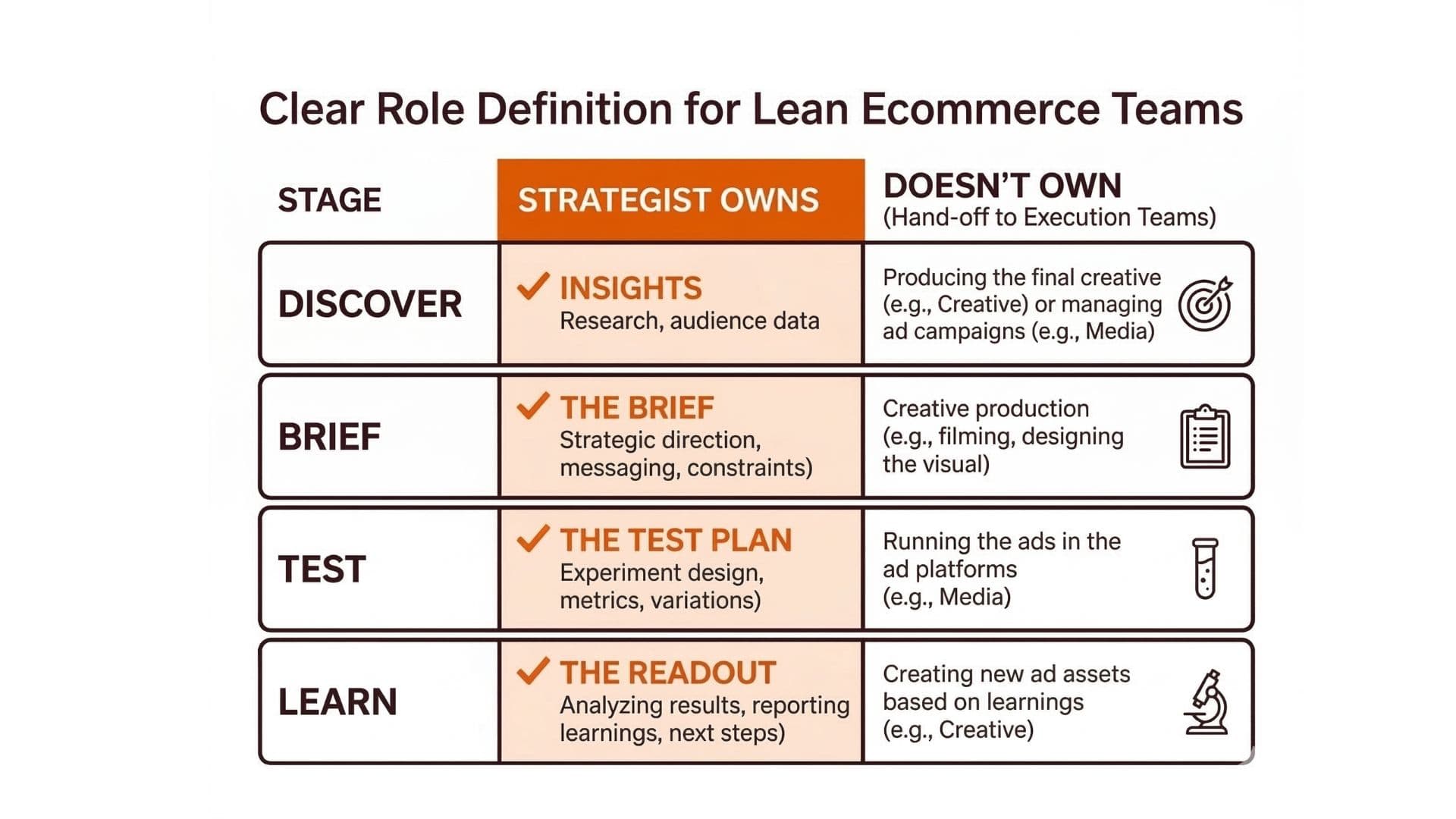
A Responsibility-by-Stage Framework
| Stage | Creative strategist responsibility | Not their job |
|---|---|---|
| Discover | Audience insights, competitor creative, past performance. Input to briefs. | Running the ads or building the audience. |
| Brief | Write or own the brief: goal, audience, message, format, success criteria. | Designing or producing the asset. |
| Test | Define what we're testing (angle, format, hook), test plan, and readout. | Setting up the campaign or building the creative. |
| Learn | Summarize what worked, what didn't, and what to try next. | Ongoing optimization or production. |
Use this to scope the role: if "brief" and "learn" are owned by someone else, you may not need a dedicated creative strategist. If no one owns them, that's the gap the role fills.
How They Work With Media and Creative
- With media: Creative strategist proposes angles and tests; media buys and optimizes. They align on audience and KPIs so the brief is executable.
- With creative: Creative strategist provides the brief and guardrails; creative produces. Strategist doesn't art-direct every frame—they set the box, creative fills it.
- With data: Strategist consumes performance and creative data to write test plans and learnings. They don't need to run the reports, but they need access and a clear readout. AI assistants trained on brand context can accelerate this analysis, surfacing patterns and recommendations faster.
One DTC team formalized this: the creative strategist owns the monthly "test plan" (3–5 hypotheses), writes the briefs, and runs the post-campaign "what we learned" doc. Media owns launch and optimization; creative owns production. Handoffs are in one tool so nothing gets lost. Output improved because one person was accountable for the strategy layer.
What This Role Is Not
- Not a creative director: Doesn't own brand look/feel across everything; focused on performance creative and tests.
- Not a media buyer: Doesn't set bids, audiences, or budgets—informs them via brief and test plan.
- Not a copywriter or designer: May draft headlines or angles, but final copy and design sit with creative.
Actionable Takeaway
Define the creative strategist by responsibility: discover, brief, test, learn. Use the framework table to decide what they own vs. media and creative. Align with media on audience and KPIs and with creative on brief format and handoff. To see how creative strategists work at scale, explore how creative strategists use Wonderful. For AI-supported workflows, see ai-ad-workflow; for broader inspiration, check out winning ad creatives by category.
For workflow integration with your media and creative teams, explore the creative operations manager role and how media buying teams collaborate efficiently.
When the creative strategist owns briefs and learnings, having one place for briefs, assets, and approvals keeps the loop tight. Wonderful ties briefs to creative and launch so your strategist can focus on the "what and why" instead of chasing versions.