Wonderful Blog
Targeted Email Marketing

Published March 10, 2026
Targeted Email Marketing
Targeted email marketing works when you stop treating every send like a broadcast and start treating it like a conversation with specific context.
This post focuses on execution: how to segment, how to tailor the message, and how to plan sends so your emails match what each audience needs next.
TL;DR
- Segment by intent + lifecycle context. Don't segment only by industry; segment by where the reader is in the journey.
- Tailor the message to the segment's next decision. Every email should answer "what should I do next?" for that segment.
- Build triggers, not just schedules. Triggered sends reduce irrelevance and improve response quality.
- Validate relevance with feedback loops. Track replies, engagement quality, and conversion outcomes, then adjust.
If you want a reference on what segmentation is (and how marketers think about it), see: Customer segmentation analysis (Mailchimp).
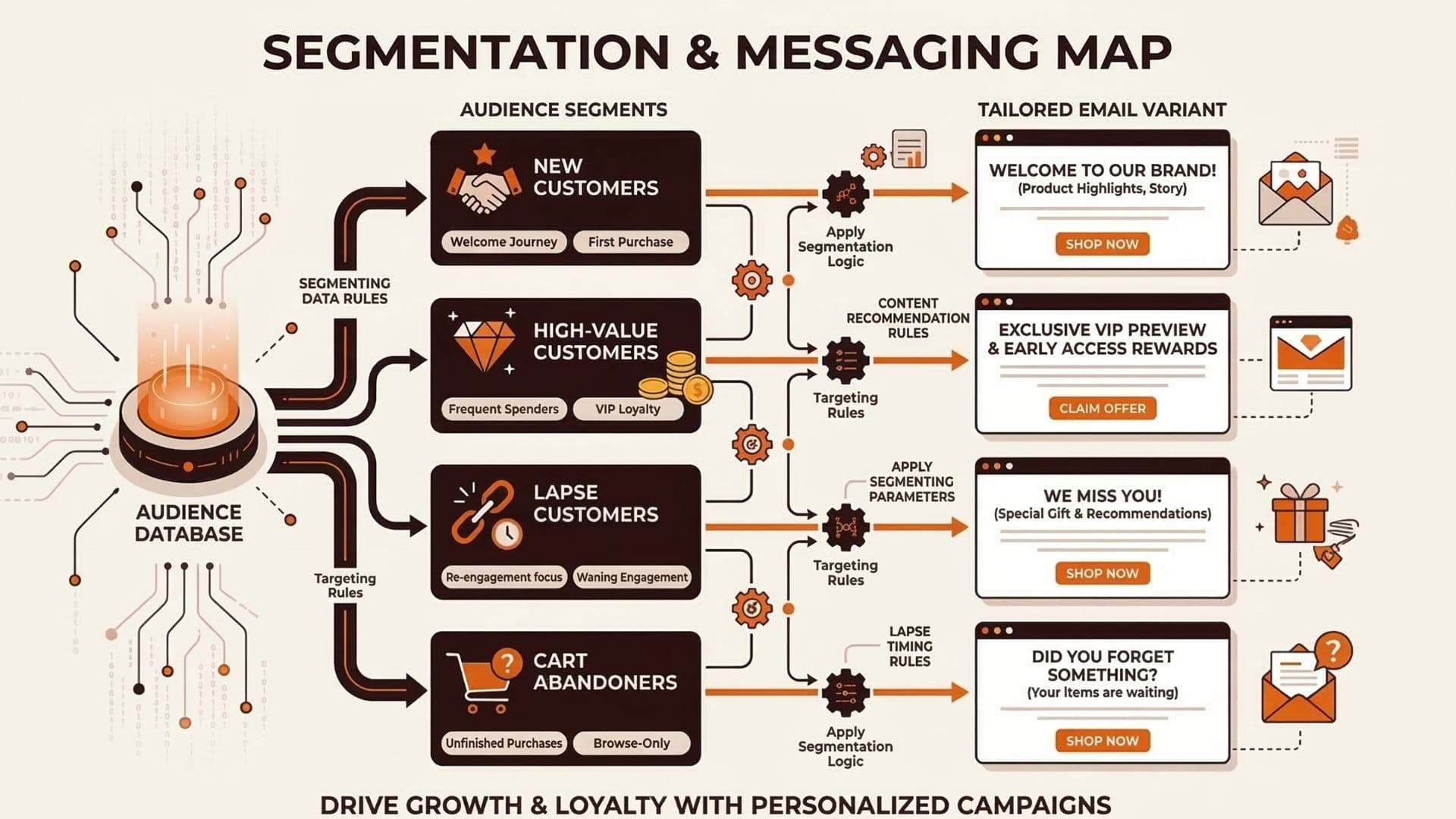
Segmenting That Actually Improves Replies
Good segmentation is about reducing mismatch.
Start with two simple dimensions:
- Intent signals: what they are trying to learn or decide now.
- Lifecycle stage: whether they are new, evaluating, or ready for a sales step.
Examples (B2B-friendly):
- New inbound lead: education + simple proof
- Evaluating lead: comparison + implementation expectations
- Existing trial user: success path + activation milestones
Avoid segments so small you can't learn from them. Start with segments that are distinct enough for relevance, but large enough for signal.
Tailor Messages by Segment "Next Step"
Once you have segments, decide what each segment needs next:
- What problem are they trying to solve right now?
- What evidence reduces risk?
- What is the next action that makes sense?
Then write the email around that decision:
- Subject/headline: earned attention for that segment's intent
- Body: 2-3 supporting beats tied to the next decision
- Proof: outcomes, credibility, and implementation detail
- CTA: one clear next step (not three competing CTAs)
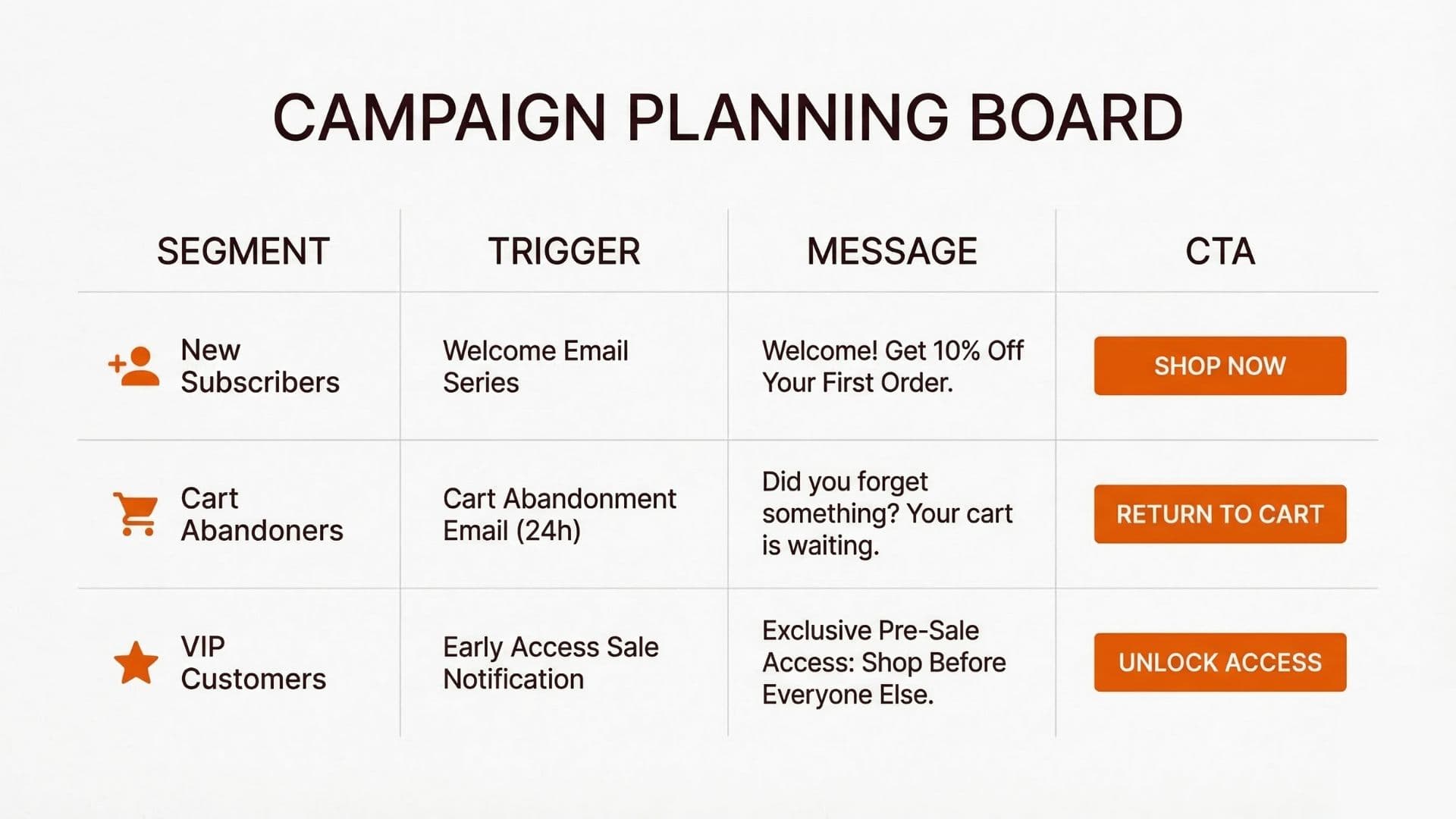
A Simple Campaign Planning Board
Use a board so you can coordinate planning without guesswork.
Create columns like:
- Segment
- Trigger (event or schedule window)
- Message theme (what it answers)
- Proof type (what makes it believable)
- CTA (the next action)
Then pick one campaign goal (reply, booked meeting, trial activation, or another business outcome) and plan each segment to contribute to that goal with relevance, not volume.
Where This Fits With Other Email Execution Work
If you want broader email strategy context, see Email Marketing 2025: Recap and What Still Matters. If you want to improve targeting quality over time, an audit-style workflow is next—see Email Marketing Audit when you get to that step. For email inspiration organized by type and vertical, see our email library.
Actionable Takeaway
To run targeted email marketing:
- Segment by intent + lifecycle context.
- Tailor each message to the segment's next decision.
- Use triggers where relevance depends on timing.
- Validate with feedback loops, then iterate.
To use email brief templates for targeted campaigns, see our briefs product.
Soft CTA
Wonderful can help you keep your email and ad creative workflow aligned so audience research turns into messaging that actually matches the segment's next step. See also Email Marketing News for latest insights.