Wonderful Blog
Meta Ads Learning Phase 50 Conversions Per Week Help Center

Published March 6, 2026
Meta Ads Learning Phase 50 Conversions Per Week Help Center
Meta’s learning phase and the “50 conversions per week” guideline show up in optimization discussions and in the help center, but the exact rule and where to read it aren’t always clear. This post points you to the source, explains what the learning phase and 50/week mean, and what to do when your account can’t hit that volume. Scope: learning phase and conversion volume only. Out of scope: full campaign setup, creative testing frameworks, or broad Advantage+ strategy.
TL;DR
- Source of truth: Meta’s Help Center and in-product tooltips describe the learning phase and recommend roughly 50 conversions per week per ad set for stable delivery.
- Learning phase is the period after a significant change (new ad set, big edit, budget shift) when the system is exploring; delivery can be volatile until it stabilizes.
- 50/week is a guideline, not a hard gate. Accounts that can’t hit it can still run—expect more variance and consider consolidating ad sets or using Advantage+ where it fits.
- Check the help center when the product wording changes; Meta updates these docs with policy and algorithm shifts. Bookmark the learning and optimization section.
- Out of scope: Creative testing, attribution, or full funnel strategy—see meta-ads-updates-february-2026 and execution-focused posts for that.
Where to Find It in the Help Center
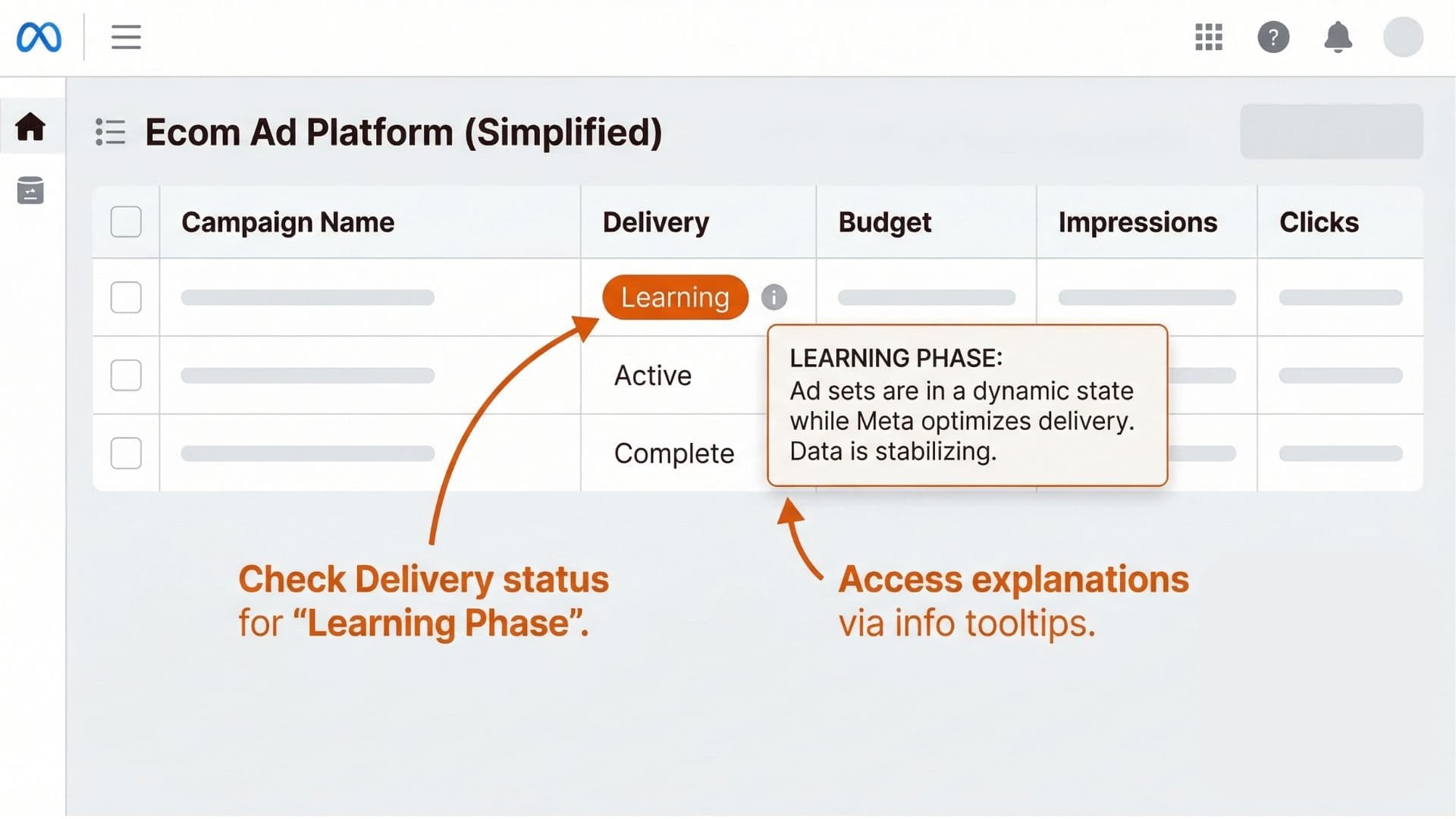
Meta documents the learning phase and conversion volume recommendations in the business help center. The canonical entry is under Ads Manager and optimization: How the learning phase works and related articles on learning in ad sets. In-product, you’ll see learning phase status and warnings in the delivery column and in the ad set level diagnostics. When in doubt, use the help center as the first-party source; third-party summaries (including this one) can lag after product updates.
What the Learning Phase Actually Is
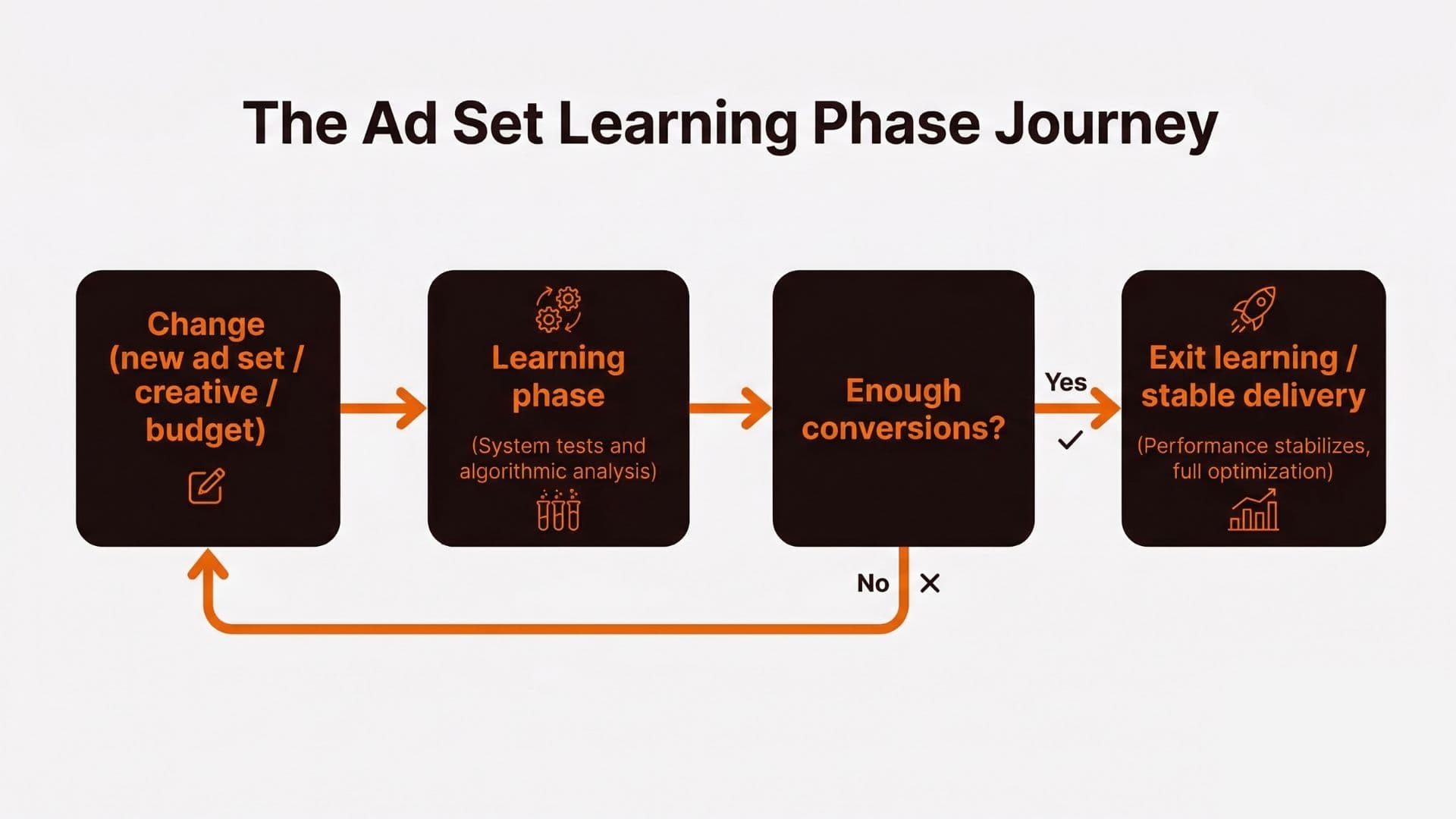
When you create a new ad set or make a significant change (e.g. new creative, large budget change, new audience), Meta enters a learning phase for that ad set. The system is exploring which people and placements drive your optimization event (e.g. purchases, leads). During this period, cost per result and delivery can swing; once the system has enough data, it exits learning and delivery typically stabilizes. Meta’s documentation states that the algorithm needs sufficient conversion volume to learn; that’s where the “about 50 conversions per week per ad set” guidance comes from—as a rule of thumb for giving the system enough signal.
What “50 Conversions Per Week” Means
Meta recommends roughly 50 conversions per week per ad set for the optimization event you chose (e.g. Purchase, Lead). That volume gives the delivery system enough data to optimize predictably. It’s a guideline, not a strict requirement: many accounts run with fewer and still get results, but they may see more variance in CPA and delivery. If you’re well below 50/week per ad set, consider: fewer ad sets (consolidate), Advantage+ campaigns where appropriate, or a higher-funnel optimization event (e.g. Add to cart) if you can’t hit 50 purchases. Jon Loomer and other practitioners have long noted that fragmenting into too many low-volume ad sets keeps accounts stuck in learning; consolidation often helps.
When You Can’t Hit 50 Per Week
- Consolidate ad sets so each has a better shot at 50 conversions/week for the chosen event.
- Use Advantage+ campaigns (e.g. Advantage+ Shopping, Advantage+ App) when they’re available and aligned with your goal; Meta often pools learning across more levers.
- Consider a higher-volume optimization event (e.g. Initiate checkout instead of Purchase) if you have the data and it’s acceptable for your goal. Use Meta’s learning-phase guidance as your reference for exit criteria and what resets learning.
- Avoid constant edits during learning; let the system run so it can exit learning. Practitioners often emphasize that patience in the learning phase often beats repeated small changes.
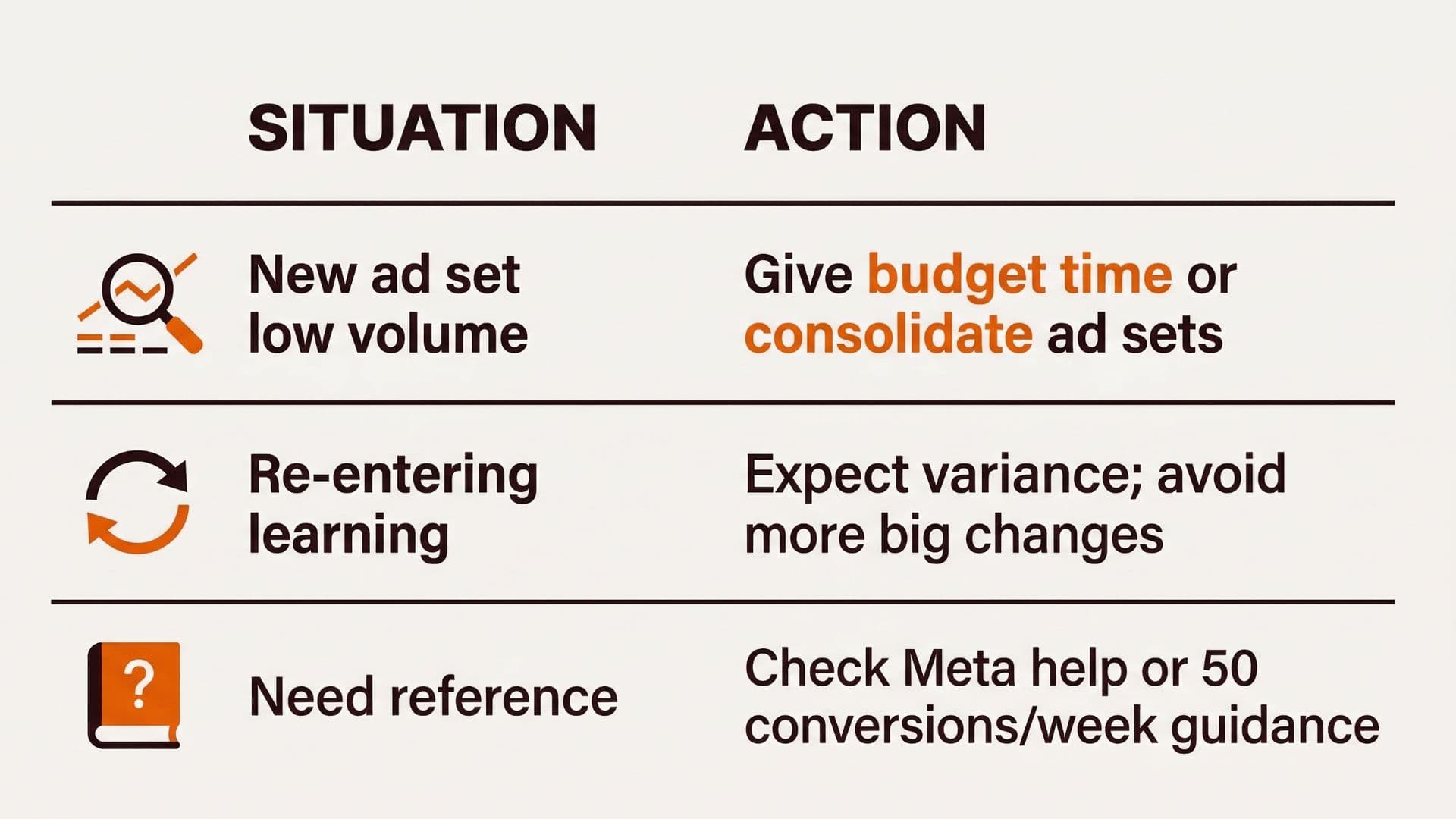
| Situation | Action |
|---|---|
| New ad set, low volume | Fewer ad sets, or Advantage+; consider higher-funnel event. |
| Exiting learning then re-entering | Fewer, larger edits; avoid many small tweaks. |
| Need first-party reference | Bookmark Meta Business Help – learning phase. |
Real-World Example: Consolidating to Exit Learning
A DTC brand was running 15 ad sets for the same purchase objective; most were in learning and CPA was erratic. They consolidated to 4 ad sets (by creative theme and broad vs. lookalike), kept budget and creative stable, and stopped making daily tweaks. Within two weeks, most ad sets exited learning and CPA stabilized. They still couldn’t hit 50 purchases per week in every ad set, but the consolidation gave the system enough signal to improve. The takeaway: fewer, stronger ad sets often beat many small ones when volume is limited.
Actionable Takeaway
Use Meta’s Help Center as the source for learning phase and the 50 conversions per week guideline. Treat 50/week as a target for stable learning, not a hard gate; if you’re below it, consolidate ad sets, consider Advantage+, and avoid constant edits during learning.
Launch and iterate on ads faster by managing learning phase within your publishing workflow; the faster you can test and validate, the more quickly you exit learning and stabilize delivery. For proven ad formats that already have conversion track records, find them in our library of ads—using proven creative in new ad sets can help you establish conversion signal faster. For platform updates and execution context, see meta-ads-updates-february-2026; for scaling spend once delivery is stable, see scaling-meta-ad-spend.
Keeping campaigns, creative, and reporting in one place makes it easier to spot learning phase and delivery issues. Wonderful helps you create and test ad creatives faster so you can focus on structure and optimization.