Wonderful Blog
Facebook Ad Agency

Published March 21, 2026
Facebook Ad Agency
Hiring a Facebook ad agency is rarely about finding people who know how to click the buttons. The real question is whether the agency can operate inside your business with enough clarity, accountability, and control to improve results.
That is why the evaluation process should focus less on broad promises and more on operating details: who is on the account, how reporting works, what access model they use, and who owns the assets and learnings. How agencies manage creative at scale reveals the workflow requirements that separate good agencies from ones that disappear into black boxes.
TL;DR
- Look at operating model, not pitch quality. Team structure and ownership terms matter more than polished decks.
- Keep control of the account. Your Business Manager, assets, and historical learnings should not disappear with the agency relationship.
- Ask how they work, not just what they claim. Strategy, setup, optimization, and reporting should be explicit.
- Make the exit path clear. A good agency relationship should be easy to understand and easy to unwind.
What a Facebook Ad Agency Should Actually Do
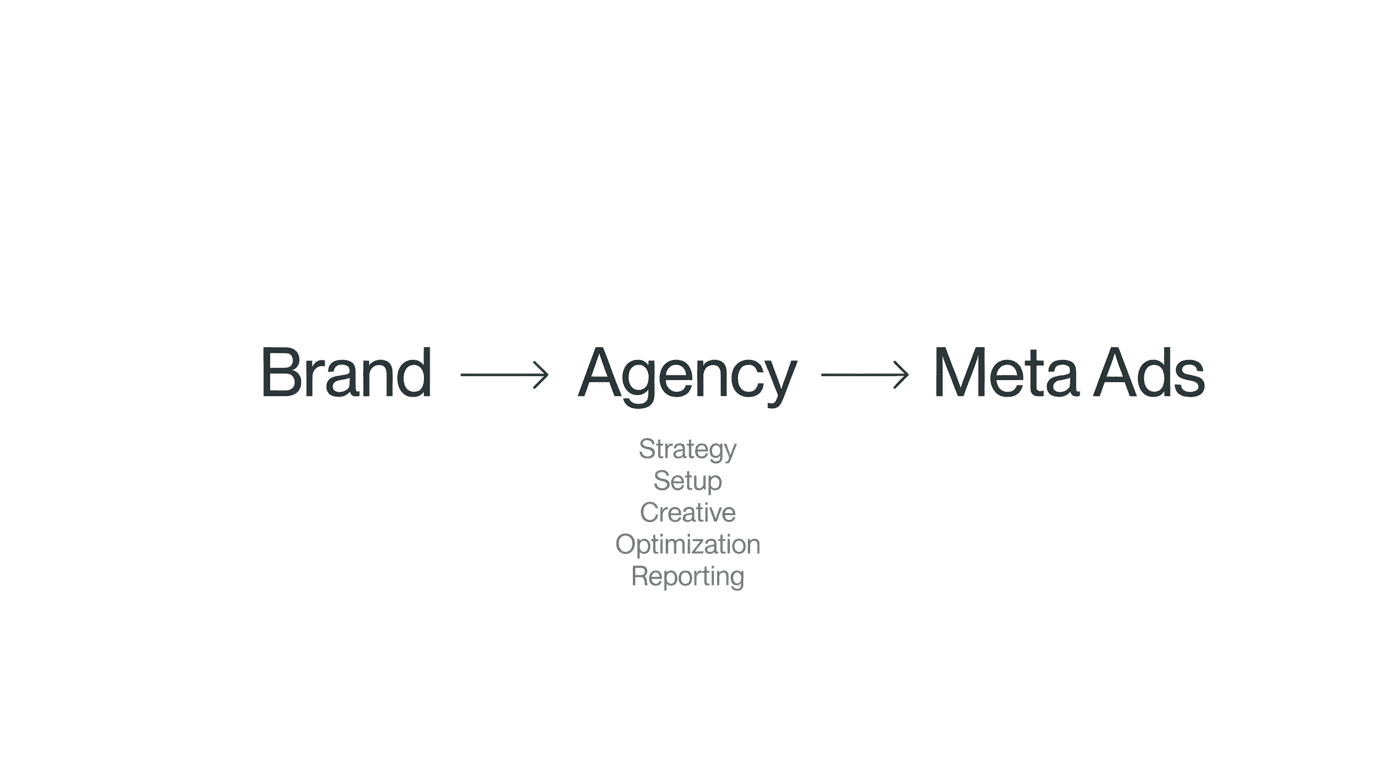
A strong agency typically helps across five areas:
- Strategy: offer direction, testing priorities, audience plan, and decision logic.
- Setup: campaign structure, tracking alignment, naming, and workflow hygiene.
- Creative coordination: making sure briefs, assets, and tests move on schedule.
- Optimization: making informed changes based on data and constraints.
- Reporting: explaining what changed, why it changed, and what happens next.
If an agency cannot clearly explain how it handles those five jobs, it is hard to trust what you are buying.
The Five Questions to Ask Before You Sign
Here are the questions that reveal the most:
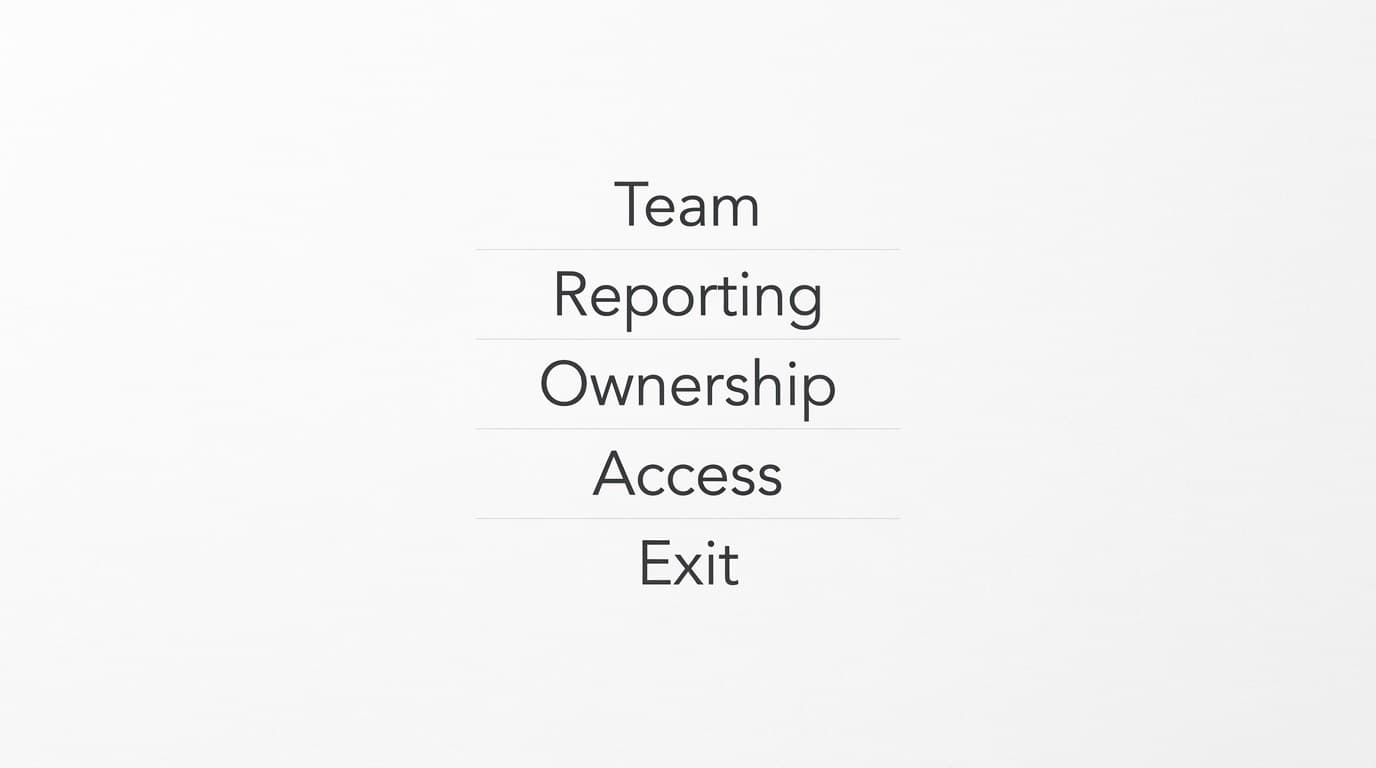
- Who is actually on the account? Senior strategist, junior buyer, or a rotating team?
- How often do we review performance? Weekly, biweekly, monthly, and in what format?
- Who owns the assets and account structure? This should be explicit in writing.
- How does access work? Ideally the agency works inside your account, not the other way around.
- What happens if we part ways? You should know what gets handed back and how quickly.
These are not administrative details. They affect how much control you keep over your growth system.
What Good Agency Reporting Looks Like
Good reporting should not feel like a PDF built to avoid difficult questions.
Useful agency reporting usually includes:
- what changed since the last review
- what the biggest driver was
- what the next recommended action is
- what is still uncertain
If the reporting is just charts without decisions, you are paying for visibility without guidance.
Red Flags to Watch For
Be careful if:
- the agency avoids specifics on team structure
- you cannot tell who owns the account setup
- the contract makes exit hard
- reporting is polished but noncommittal
- they cannot describe how they coordinate with your creative process
An agency does not need to do everything in-house, but it should make the workflow legible.
Actionable Takeaway
The best Facebook ad agency is not the one with the biggest claim. It is the one with the clearest operating model.
Before you sign, make sure you understand:
- who is on the account
- how they work
- what you own
- how decisions get made
- what happens if the relationship ends
If those answers are unclear, the risk is structural, not tactical.
Soft CTA
Wonderful helps brands and agencies coordinate briefs, assets, approvals, and reporting so ad workflows stay visible instead of disappearing into scattered tools and handoffs. An agency workflow for Meta ad production keeps creative cycles transparent and asset ownership clear. For more on how strong agencies operate, see Facebook Ads Expert and Landing Page Agency.