Wonderful Blog
Event Landing Page

Published March 7, 2026
Event Landing Page
Event landing pages convert when they remove uncertainty quickly. People sign up when they understand: what the event is, when it happens, who it is for, why it matters, and what they get immediately after registering.
This post focuses on structure for paid and informational traffic: clarity up top, agenda preview, speaker proof, and a registration experience that works on mobile.
TL;DR
- Make date/time undeniable. Show it clearly above the fold and repeat it near the CTA.
- Preview the agenda. Buyers want proof the event covers their questions, not just a title.
- Use speaker proof. Credibility reduces perceived risk and increases registration confidence.
- Keep the page focused. One primary registration CTA and minimal competing navigation.
Event pages also need good user experience and performance signals. For reference, see Google page experience guidance and (if you want SEO support) Event structured data.
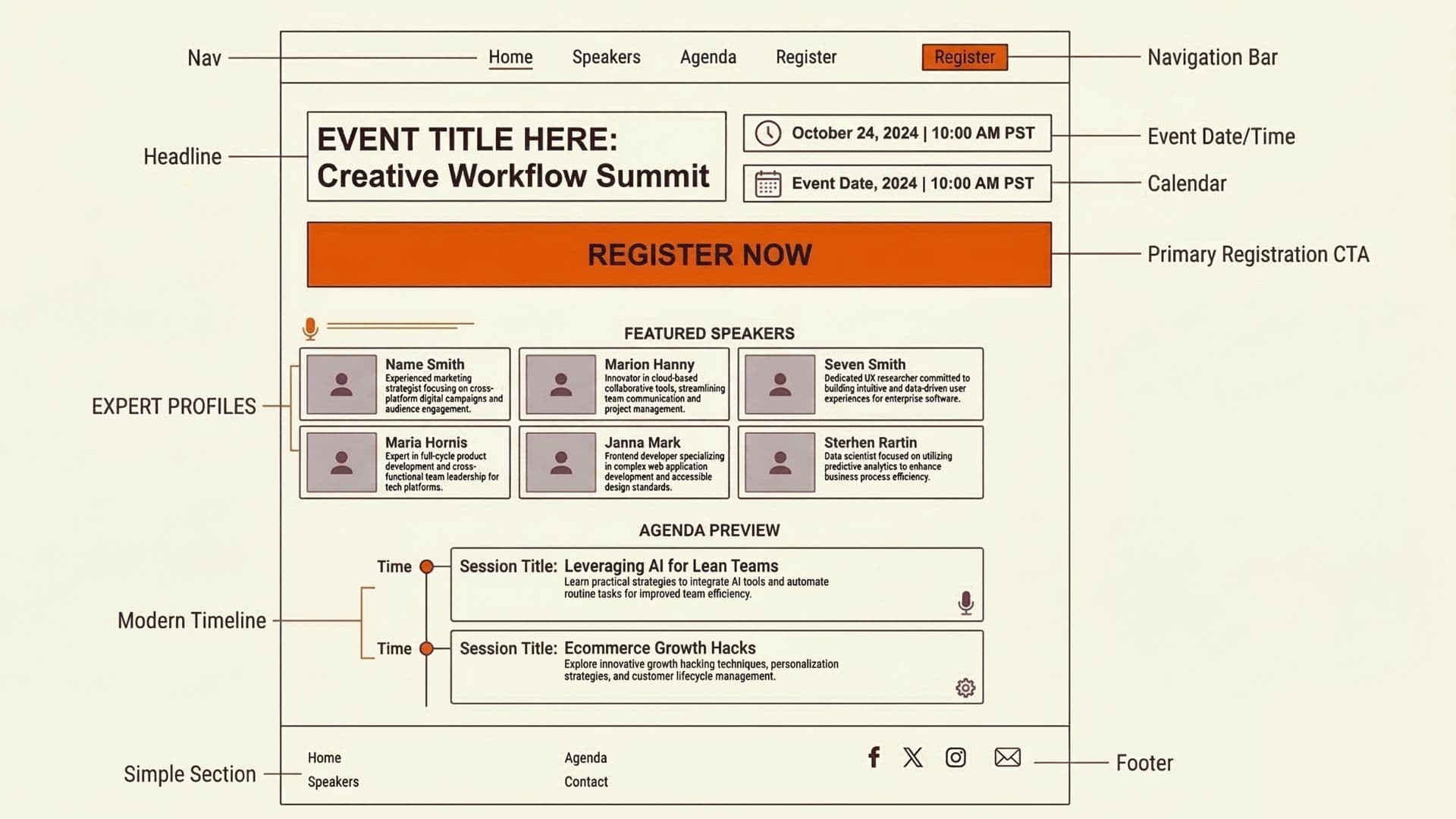
Event Landing Page Wireframe (What to Include)
Use this as your baseline wireframe:
- Hero: event name + one-line value statement + clear date/time
- Speakers: short identity proof (who they are and why they matter)
- Agenda preview: 3–5 bullets or a short timeline
- Primary CTA: registration button with a short “what happens next” line
The goal is not to explain everything. The goal is to eliminate “wait, will this be relevant?” and “what do I do after I sign up?”.
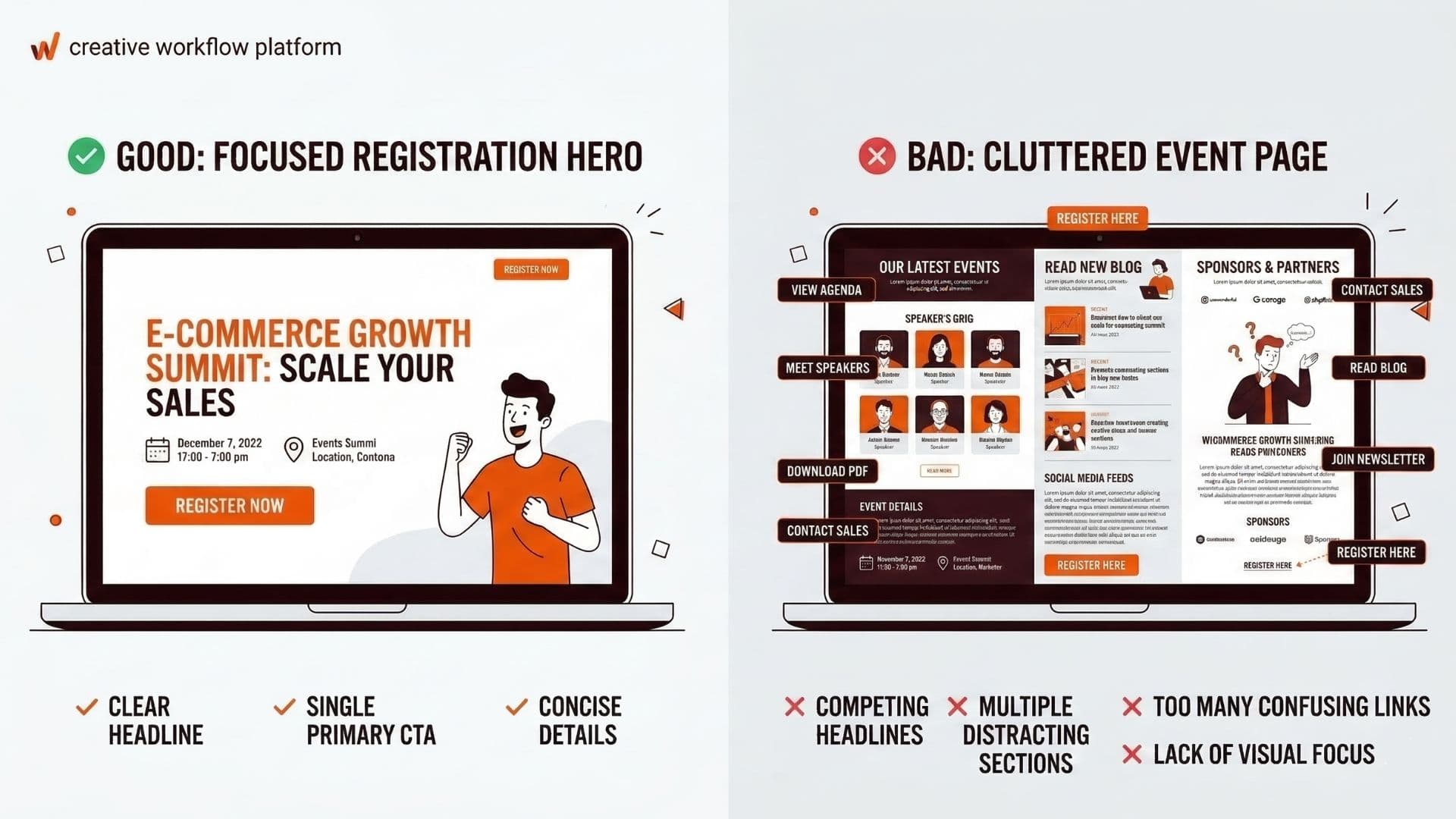
Good vs Bad: Where Event Pages Lose Signups
Most event landing pages fail in predictable ways:
- Cluttered hero: multiple CTAs and unclear date/time.
- Agenda missing context: buyers see a list of topics without what they’ll learn or why it applies.
- Weak speaker proof: names without credibility.
- Competing links near the CTA: navigation steals attention from registration.
Event Landing Page Checklist (Execution Focus)
Before publishing, verify:
- Date/time is visible above the fold and timezone is clear.
- Registration CTA appears in the same scroll area on mobile.
- Agenda preview matches the buyer’s questions (3–5 items).
- Speaker proof is specific (titles, outcomes, credibility).
- Mobile usability: form fields are short and don’t break layout.
Post-Registration Experience (Don’t Skip This)
Conversion doesn't end at the submit button. A good event page makes the next step obvious so the attendee actually shows up.
- Confirmation screen: show what happens next (calendar invite, email delivery timing, where to view details).
- Timezone clarity: repeat the date/time and timezone in the confirmation messaging (people miss the first one).
- Agenda recap: include a short “what you’ll get” summary (3–5 bullets) so it feels worth it immediately.
- Trust elements: include cancellation/reschedule policy and what to expect (format: live, recording, Q&A).
Actionable Takeaway
Build your event landing page around clarity and proof:
- date/time at the top
- agenda preview
- speaker credibility
- one focused registration CTA
For event landing page examples, see our library. To use templates for event page production, use our briefs product. For broader landing page quality signals, see Which Attributes Describe a Good Landing Page Experience. For additional guidance, see Landing Page Inspiration.
Soft CTA
Wonderful can help teams coordinate event landing page creative, approvals, and asset workflows so updates happen quickly when you need them.