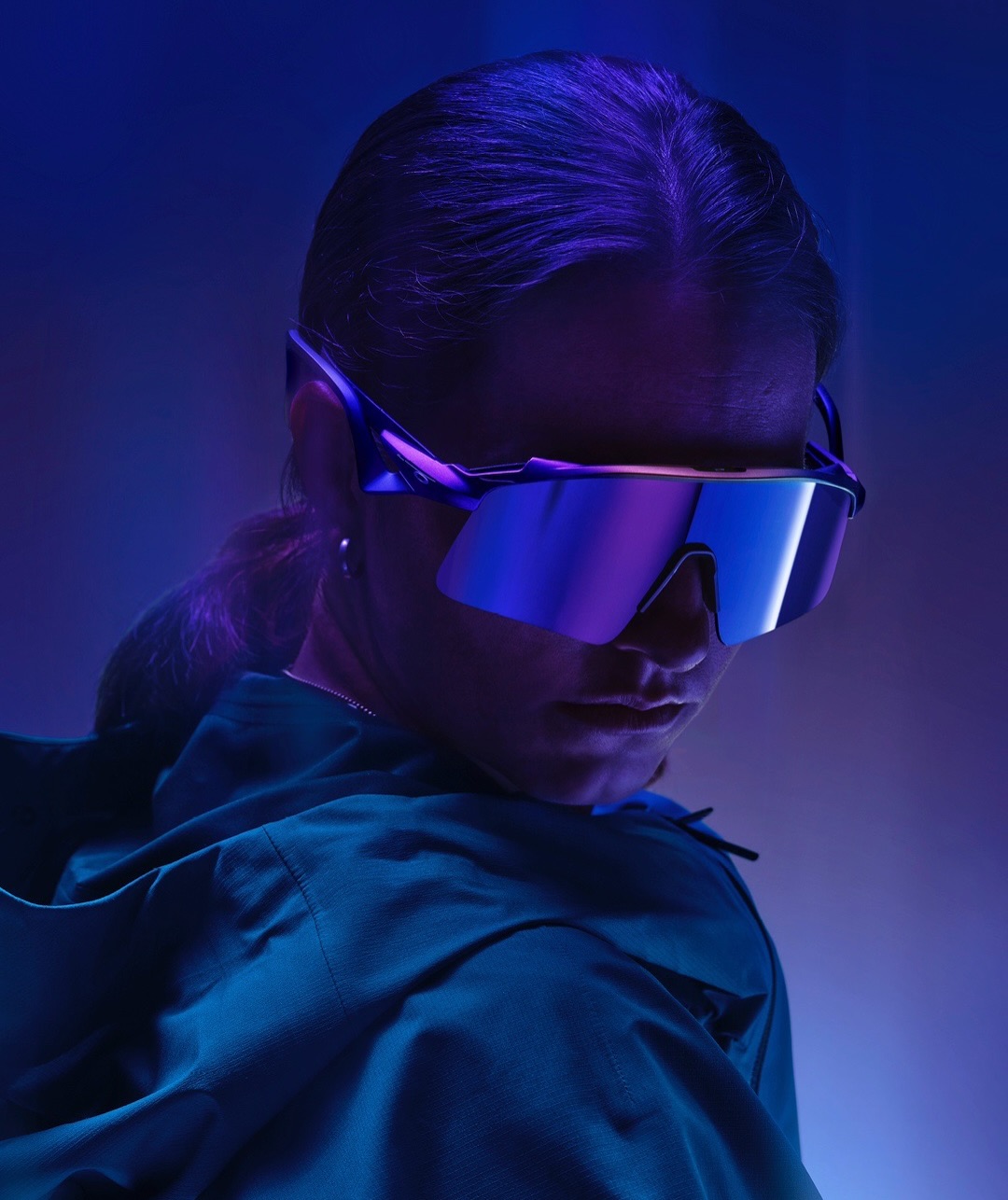
0:00helmet reflections
The scene opens with a close-up, centered shot of a futuristic-looking helmet or visor, possibly the central component of an astronaut's headgear. It is black and highly reflective, mirroring two symmetrical, square-shaped objects on either side, which appear to be light sources or sensors. A thin, horizontal, glowing white line stretches across the dark background above and below the central object, suggesting a sleek, technological environment. The overall color palette is monochromatic, dominated by deep blacks and bright whites, creating a high-contrast, almost sterile, yet mysterious atmosphere. The reflections within the visor are crisp and metallic, hinting at advanced materials. The camera remains static, focusing intently on this singular, intricate piece of equipment.
0:01thermal scan visor
This scene displays a thermal imaging view, characterized by a vibrant spectrum of reds, oranges, and yellows against a dark background, indicating varying temperatures. The dominant element is a large, curved, dome-like shape, possibly part of an astronaut's helmet or visor, which occupies the lower two-thirds of the frame. Intricate geometric patterns and gridlines are visible across the surface, suggesting an internal structure or a thermal scan overlay. Small digital text and coordinates (e.g., 'X: 2245') are overlaid on the image, simulating technical data feedback. The camera is static, presenting a detailed, analytical perspective of the object, highlighting its thermal properties. The colors create an intense, almost molten, appearance.
0:02visor reflection icy landscape
The scene features a close-up, slightly tilted view of a reflective visor, likely from an astronaut's helmet. The visor mirrors a desolate, monochromatic landscape, possibly an icy lunar or planetary surface, characterized by jagged, snow-covered terrain under a dark, starry sky. The reflection is distorted by the visor's curvature, giving a wide-angle, panoramic feel to the alien environment. White digital text and coordinate readings are overlaid on the reflection, indicating data being processed or displayed to the wearer. The color palette is cool, predominantly whites, greys, and deep blues, evoking a sense of cold, vast emptiness. The camera slowly pans downwards, revealing more of the reflected landscape.
0:03glitchy helmet view
This shot is an extreme close-up, seemingly from an internal perspective within an astronaut's helmet. The view is highly distorted and glitched, with digital static and pixelation obscuring the details. What appears to be the inside of a visor or a reflective surface is visible, showing fragmented reflections and patterns. Bright, almost blinding white light streaks and flickers across the frame, mixed with digital data overlays that briefly appear and disappear, reminiscent of a malfunctioning heads-up display. The chaotic visual noise suggests an intense, potentially dangerous, environment or a critical system error. The camera is mostly static but the visual information is very dynamic, creating a sense of urgency and instability.
0:03moon surface craters
A high-angle, wide shot of the Moon's heavily cratered surface unfolds against the stark blackness of space, dotted with distant, faint stars. The lunar landscape is illuminated from an unseen source, casting dramatic shadows that emphasize the deep, irregular textures of the craters and mountains. The surface appears desolate, a rugged expanse of greys and whites, with dust and rocks visible in sharp detail. The camera executes a slow, deliberate push-in motion, gradually bringing the intricate details of the lunar terrain closer to the viewer, enhancing the sense of scale and the vast, unyielding nature of the extraterrestrial environment. The mood is one of quiet majesty and isolation.
0:04fiery sun close up
The scene presents a magnificent, close-up view of the Sun, depicted as a colossal, intensely glowing sphere of fire and plasma. Its surface is a tumultuous expanse of vibrant oranges, fiery reds, and brilliant yellows, with flares and coronal loops visibly erupting and dancing across its surface. The extreme brightness creates a halo effect around the star, emphasizing its immense power and heat. The dark void of space provides a stark contrast, making the Sun appear even more incandescent. The camera is static, allowing the viewer to absorb the awe-inspiring, dynamic spectacle of the star's raw energy. The chaotic yet beautiful movement of the plasma gives a sense of immense, unstoppable cosmic forces.
0:05bright light to hand
The scene transitions rapidly from an almost blinding burst of ethereal white light that fills the entire screen, giving way to a blurry, indistinct view of an environment. As the light fades and the blur begins to resolve, a human hand comes into partial view in the lower right portion of the frame. The hand is reaching or adjusting something, its movements quick and purposeful. The overall lighting is dim and mysterious, with a cool, bluish-green tint that casts soft shadows. The background remains out of focus, suggesting a close-up on the action of the hand without revealing the full context. The camera seems to be slightly handheld, adding to the dynamic and slightly disorienting feel of the transition.
0:06astronaut hand on suit
A medium close-up shot focuses on a human hand, gloved in what appears to be part of an astronaut's suit, gently touching or adjusting a section of the protective gear. The suit material is light-colored, possibly white or very pale grey, and has subtle textural details. The lighting is soft and diffuse, with cool, ambient blue tones dominating the scene, creating a calm yet purposeful atmosphere. The background is largely out of focus, emphasizing the hand and the immediate area of the suit. The action is slow and precise, suggesting careful preparation or examination. The composition highlights the tactile interaction between the individual and the sophisticated equipment, underscoring the delicate balance of technology and human effort.
0:07thermal scan suit component
This scene revisits the thermal imaging aesthetic, displaying a close-up of another component, likely part of an astronaut's suit or equipment. The color palette is vivid, featuring deep purples and blues transitioning into bright oranges and yellows, indicating heat distribution across the object's surface. Similar to previous thermal shots, digital text and coordinate values (e.g., 'X: 1653 Y: 237') are overlaid, suggesting scientific monitoring. The object has a curved, complex shape with visible lines and segments, implying intricate design. The camera holds a static position, providing a detailed, analytical view, while the fluctuating colors within the thermal spectrum create a dynamic visual texture. The background is dark and indistinct, allowing the glowing thermal data to stand out prominently.
0:08person donning helmet liner
A close-up shot focuses on a person, likely a male, from a side profile as he carefully adjusts a dark, skullcap-like liner or a component of a helmet over his head. His expression is serious and concentrated, with visible beads of sweat on his forehead, indicating effort or anticipation. The lighting is somewhat dim, with cool, blue-grey tones, creating a slightly dramatic and intimate atmosphere. His eyes, though partially obscured, appear to be light-colored. The background is blurred and dark, keeping the focus entirely on the subject's actions and facial features. The hands, possibly gloved, are seen gently manipulating the headgear, emphasizing the meticulous process of preparing for an important mission. The camera is static, capturing the intensity of the moment.
0:10human eye extreme close up
An extreme close-up fills the entire frame with a human eye, revealing intricate details of the iris, pupil, and surrounding skin. The iris is a striking blue-green, with complex patterns and textures clearly visible. The pupil is a deep black, reflecting a single, small, bright point of light, possibly from a distant source or an internal display. The skin around the eye, including the eyelashes and subtle lines, shows texture and some moisture. The lighting is dim but highlights the eye's features with a soft glow, creating an intense and almost hypnotic effect. The camera is static, focusing on the profound depth and complexity of the eye, conveying a sense of introspection or a critical moment of observation. The subtle reflections within the pupil suggest a world beyond what is immediately visible.
0:11rocket engine ignition
The scene plunges into the raw power of a rocket engine ignition, captured in a dynamic close-up. The lower portion of two massive rocket engines fills the upper frame, obscured by the torrential outpouring of brilliant orange and yellow flames. A colossal plume of fire and superheated gases erupts downwards, consuming the lower half of the screen in a maelstrom of light and smoke. The intense heat distortion is visible as shimmering air around the flames. The color palette is overwhelmingly warm, dominated by fiery hues that evoke immense energy and heat. The camera is positioned directly below the engines, looking upwards, capturing the initial, violent surge of thrust. The motion is rapid and explosive, conveying the immense forces at play during a rocket launch.
0:12night rocket launch
A majestic wide shot captures a towering, white and orange rocket ascending into the dark night sky, leaving a spectacular trail of brilliant fire and smoke. The rocket, prominently positioned in the center, is illuminated by its own powerful engine exhaust, which casts a glowing aura against the deep blackness. The enormous plume of fire and white smoke billows outwards from the launchpad, creating a dramatic halo of light around the base of the vehicle. The overall lighting is dominated by the intense golden and orange glow of the rocket's engines against the dark, starless sky, evoking a sense of human ambition and technological prowess. The camera is static, holding a grand perspective of the launch, emphasizing the scale and spectacle of the event as the rocket steadily climbs.
0:15starfield space
The scene depicts a vast, immersive starfield, showcasing countless tiny white stars scattered across an infinite canvas of deep, velvety black space. The stars vary slightly in brightness, creating a subtle texture within the cosmic expanse. There are no planets, galaxies, or nebulae visible, emphasizing the pure, unadulterated emptiness and grandeur of deep space. The color palette is simple but profound: white against black, highlighting the sheer scale of the universe. The camera executes a slow, almost imperceptible dolly forward, giving the impression of gently drifting through the silent, cold vacuum of space. The absence of discernible objects evokes both a sense of wonder and profound solitude.
0:16moon rocky horizon
A low-angle, wide shot reveals a stark and dramatic lunar landscape. Jagged, dark grey rock formations and mountain ridges dominate the upper half of the frame, casting deep, elongated shadows across the foreground. The terrain below is rough and uneven, consisting of rocky debris and dust, illuminated by an unseen light source that emphasizes its texture. The sky above is pitch black, devoid of stars or light, creating a strong contrast with the brightly lit ridges. The scene evokes a sense of rugged exploration and isolation. The camera slowly pans right, revealing more of the barren, alien terrain and emphasizing the vastness of the lunar surface.
0:18moon surface dark horizon
This scene presents a sweeping view across a dark, undulating lunar landscape under an even darker, featureless sky. The foreground is a vast expanse of muted grey and black terrain, suggesting an endless, barren plain. Subtle variations in texture and shadow imply craters and low hills. A faint, almost imperceptible line of horizon separates the moon's surface from the absolute blackness of space. The lighting is extremely dim, creating a somber and mysterious atmosphere, with minimal highlights on the terrain. The camera slowly pans across the landscape, giving a sense of drifting over a desolate world. The overall impression is one of profound solitude and the immense, quiet emptiness of space.
0:19sun over dark horizon
The scene transitions to a breathtaking view of a radiant, golden orb, likely the sun, hovering just above a dark, distant horizon line. The horizon itself appears to be the rugged, shadowed edge of a celestial body, possibly a moon or planet. The sun emits an intense, warm glow, casting a long, bright lens flare horizontally across the frame. The sky above the horizon is a deep, rich brown or reddish-black, subtly illuminated by the sun's light, creating a dramatic twilight effect in space. The foreground consists of dark, undulating clouds or distant terrain, silhouetted against the bright horizon. The camera slowly pans right, enhancing the sense of vastness and the dynamic interplay of light and shadow in an extraterrestrial setting.
0:21human eye reflecting light
An extreme close-up on a human eye, similar to an earlier shot, but with increased intensity and detail. The iris is a vivid blue-green, displaying intricate patterns and subtle variations in color. The pupil is dilated, acting as a perfect mirror for a small, intensely bright, almost orange-yellow light source that reflects clearly within it. This reflection creates a sharp point of focus against the dark pupil. The skin surrounding the eye, including the lower eyelid and subtle creases, is visible, adding a sense of realism. The lighting is low, yet precisely highlights the eye's features, emphasizing the reflection. The camera performs a very subtle push-in, making the reflection in the pupil seem to grow slightly brighter, drawing the viewer deeper into the subject's gaze and what they are perceiving.
0:23moon surface light reflection
A low-angle, wide shot reveals a textured, rugged lunar surface, similar to previous moonscapes, but with a noticeable and bright light source reflected on its uneven terrain. The ground is a mix of dark greys and whites, indicating craters, rocks, and dust, all sharply defined by the dramatic lighting. A distant, circular orb, possibly the sun or Earth, is visible just above the distant horizon, casting a soft, yet impactful glow that creates a shimmering reflection across the lunar regolith. The sky above is a deep, inky black, providing a stark backdrop to the celestial body. The camera slowly pans to the right, sweeping across the reflective surface and emphasizing the vast, illuminated expanse of the moon under the gaze of a distant light source, suggesting a new dawn or discovery.
0:24astronaut helmet reflection
A dynamic shot transitions from a close-up on an astronaut's helmet visor to a wider view of the upper torso. The dark, curved visor prominently reflects a vast lunar or planetary landscape, similar to previous scenes, with its rugged, grey terrain and a distant, bright orb (sun or Earth) visible on the horizon. The reflection is sharp and detailed, encompassing the entire alien panorama. As the camera slowly pulls back, more of the white, intricate space suit comes into view, revealing details like lights on the helmet and various connectors and buttons on the chest plate. The lighting is cool, with subtle blue tones, and highlights the metallic sheen of the helmet and suit. The background remains dark and out of focus, emphasizing the astronaut as the focal point, poised for exploration. The camera's smooth dolly out emphasizes the scale and complexity of the suit.
0:26astronaut on moon surface
A full-body, wide shot captures an astronaut standing heroically on a desolate, moon-like surface. The astronaut is clad in a pristine, bright white space suit, equipped with various lights and advanced gear, including a prominent backpack. They are positioned in the middle of the frame, facing slightly towards the camera. A powerful, ethereal blue-white light emanates from behind the astronaut, creating a dramatic backlighting effect that gives them a luminous aura and casts long, soft shadows. The ground beneath them is a grey, rocky, and uneven terrain, suggesting a lunar or alien landscape. The sky above is dark and mysterious. The camera is static, accentuating the astronaut's solitary yet powerful presence, symbolizing humanity's pioneering spirit in the vastness of space. The overall mood is epic and inspiring, emphasizing exploration.
0:28text not meant for earth
The scene is a stark, minimalist black screen. Centered horizontally and vertically in the frame is white text that reads, 'Not Meant For Earth'. The font is a clean, modern serif typeface, elegant yet impactful. The absence of any other visual elements creates a powerful focus on the message, allowing it to resonate clearly. The solid black background reinforces the themes of space, the unknown, and a departure from the familiar. The camera is static, and there is no motion or additional graphics, ensuring the text is the sole point of attention and conveying a definitive statement.
0:28logo reveal oakley axiom
The scene displays a clean, black background, completely devoid of any other visual elements, maintaining a minimalist and sophisticated aesthetic. Centered horizontally in the frame are two white logos, positioned side-by-side with a subtle separation. On the left is the distinctive 'Oakley' logo, featuring its stylized 'O' and full brand name. To its right, the 'Axiom Space' logo is visible, presented in a modern, angular typeface. Both logos are rendered in crisp white against the deep black, creating a high-contrast and professional appearance. The camera remains static, holding the final branding message steady until the end of the video, signifying a partnership and the conclusion of the narrative. The sharp, clean lines of the logos convey precision and innovation.