Wonderful Blog
TikTok Ad Template

Published March 12, 2026
TikTok Ad Template
Most TikTok “templates” are just swipes. This post is about something more useful: a repeatable creative structure you can reuse so every new ad starts from the same logic (hook -> proof -> CTA) instead of starting from scratch.
If your team is creating TikTok ads weekly (or daily), templates are how you reduce rework while improving consistency.
TL;DR
- Use a template for structure, not style. You can swap visuals, but keep the same hook/proof/CTA order.
- Separate template steps from editing steps. Templates decide what the ad contains; editing decides what it looks like.
- Make review faster with a workflow. Draft from the template, edit for brand, then approve once per ad batch.
- Keep the template scoped to TikTok ads. Don't let the template turn into a generic social checklist.
For official guidance on how TikTok expects creative to perform (and why structure matters), see: Creative best practices for performance ads.
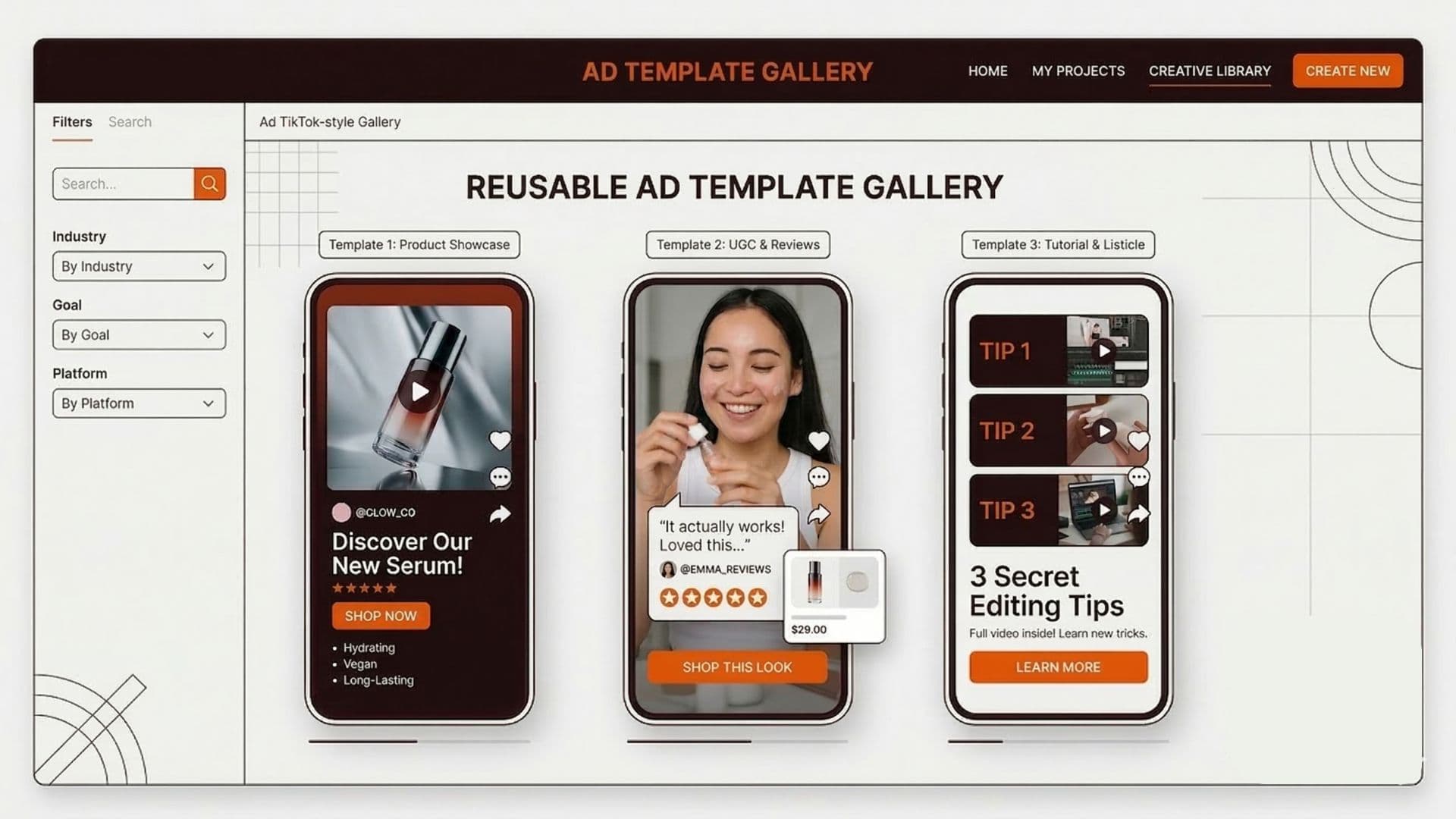
What Goes Into a TikTok Ad Template
A useful TikTok ad template has the same core blocks every time:
- Hook (0-2 seconds): the first line/visual that earns attention fast.
- Message body: 1-3 supporting beats that make the hook believable.
- Proof: outcomes, screenshots, numbers, or credible claims.
- CTA: the next step you want (learn more, get offer, book, try, etc.).
Instead of “write a TikTok ad,” you decide which version of each block you are using.
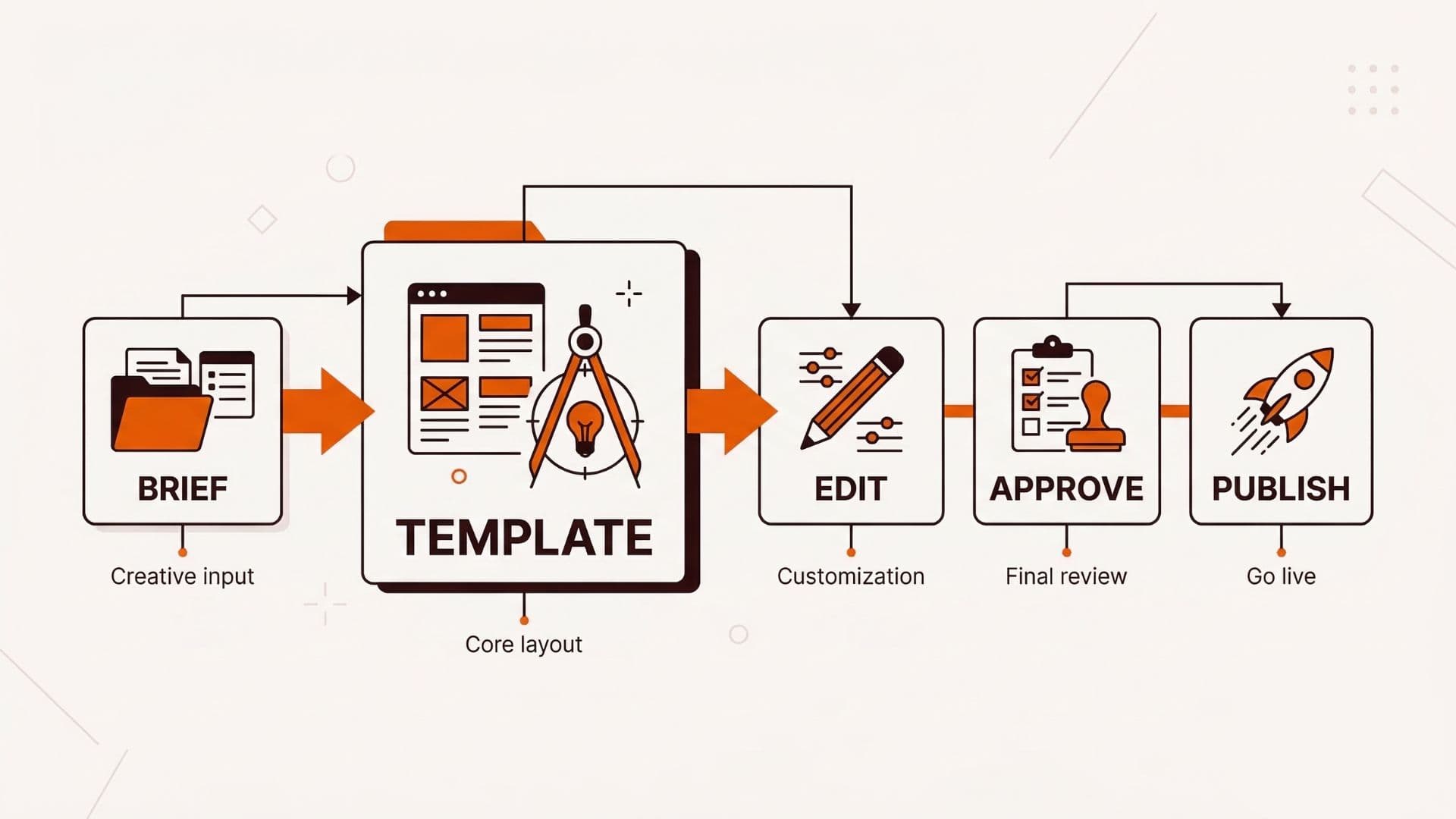
The Template Workflow (Brief -> Template -> Edit -> Approve -> Publish)
When you have a team, the template should create a single workflow everyone understands:
- Brief: audience, offer, and compliance constraints.
- Template step: pick a hook/proof/CTA structure that matches your objective.
- Edit: adapt copy, visuals, and pacing to your brand and the current offer.
- Approve: review as a batch for consistency (not line-by-line chaos).
- Publish: release the batch, then measure performance and iterate the blocks that matter.
This workflow is how templates stay useful instead of becoming a static document no one follows.
Example: Template Variants You Can Reuse
Here are three simple structure variants most teams can build quickly:
- Value-First Template: hook = value promise, proof = outcome or mechanism, CTA = conversion action.
- Problem-Flip Template: hook = pain/objection, message body = why it happens, proof = case or demonstration, CTA = learn more.
- Time-Saver Template: hook = faster/less effort, message body = what gets simplified, proof = proof points, CTA = request demo/offer.
You don't need 20 templates. You need 3-5 that your team can choose from without guessing. Use brief templates for TikTok ad production to keep your creative team aligned, and browse TikTok-style ad creatives from top brands for reference.
Internal Context (Adjacent, Not In-Scope)
If your team is also troubleshooting TikTok ad delivery and setup access, start with TikTok Ads Login. If you need to review policy-sensitive landing flow or tracking details, see Ads Cloaking on TikTok for adjacent guidance.
Actionable Takeaway
Treat a TikTok ad template as a creative structure you can reuse:
- Choose the hook/proof/CTA order by objective.
- Generate drafts from the template.
- Edit for brand and offer.
- Approve once per batch, publish, then iterate the blocks that underperform.
Soft CTA
If you want less back-and-forth between creative drafts and approvals, Wonderful can help you connect templates, reviews, and publishing decisions so your TikTok production stays consistent. Use Wonderful's Review & Approvals to review TikTok ads with frame-accurate feedback. For timing best practices, see How Long Should a TikTok Ad Be?.